 Save
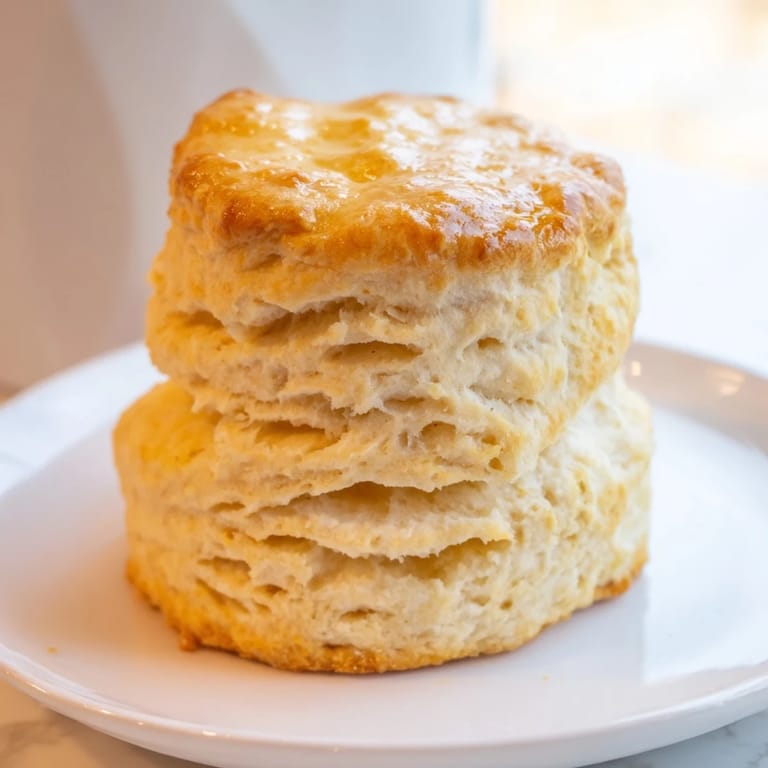
Save My grandmother's kitchen always smelled like buttermilk and warm butter when biscuits were in the oven, and I'd sneak warm ones straight from the cooling rack while she'd pretend not to notice. There's something almost magical about how simple ingredients—flour, butter, buttermilk—transform into something so ridiculously good that you find yourself baking them more often than you probably should. The first time I made them alone, I overworked the dough and they came out dense, but that failure taught me the secret: hands off, barely touch it, let the butter stay cold and lumpy. Now they're the first thing I bake when someone visits, and somehow they're never enough.
I made these for a potluck once and watched someone eat three without saying a word, just closed eyes and quiet satisfaction, and I knew I'd nailed something real. That moment stuck with me because it wasn't fancy or complicated—it was just good butter and buttermilk doing what they've done for generations.
Ingredients
- All-purpose flour (2 cups): This is your foundation, and measuring it by weight matters more than you'd think to avoid dense biscuits.
- Cold unsalted butter (½ cup, cubed): The whole game lives here—keep it cold, let it stay in little pieces, and your biscuits will be flaky instead of dense and sad.
- Cold buttermilk (¾ cup): The acidity does something special to the crumb, making them tender in a way regular milk just won't achieve.
- Baking powder and baking soda (1 tablespoon and ½ teaspoon): These are your lift, your rise, your promise of tall golden biscuits.
- Fine sea salt (1 teaspoon) and granulated sugar (1 tablespoon): Salt brings out flavor, sugar just barely sweetens the background without making them dessert.
Tired of Takeout? 🥡
Get 10 meals you can make faster than delivery arrives. Seriously.
One email. No spam. Unsubscribe anytime.
Instructions
- Heat your oven and prepare:
- Set your oven to 220°C (425°F) and line a baking sheet with parchment paper so they don't stick and brown unevenly on the bottom.
- Mix the dry ingredients:
- Whisk together flour, baking powder, baking soda, salt, and sugar in a large bowl, making sure everything is evenly distributed so you don't get spots that won't rise.
- Work in the cold butter:
- Add your cubed cold butter and use a pastry cutter, two forks, or your fingertips to work it into the flour until it resembles coarse crumbs with some pea-sized butter pieces still visible—this is crucial, don't reduce it to powder.
- Add the buttermilk gently:
- Make a well in the center, pour in the cold buttermilk, and stir with a fork until just barely combined, stopping the moment everything comes together because overworking is the enemy here.
- Fold for flakiness:
- Turn the dough onto a lightly floured surface, gently pat it into a rectangle about 1.5 cm thick, fold it in half, pat it out again, and repeat this folding motion two more times to create those gorgeous flaky layers.
- Cut with confidence:
- Pat your dough to a final thickness of 2.5 cm, then use a 6 cm round cutter pressed straight down (never twist—twisting seals the edges and prevents rising) and gather scraps to re-pat and cut again.
- Brush and bake:
- Place biscuits close together on your prepared sheet, brush the tops lightly with buttermilk, and bake for 13 to 15 minutes until they're tall and golden brown on top.
- Cool briefly:
- Let them rest for a few minutes before serving warm, which is really the only way to eat a fresh biscuit.
 Save
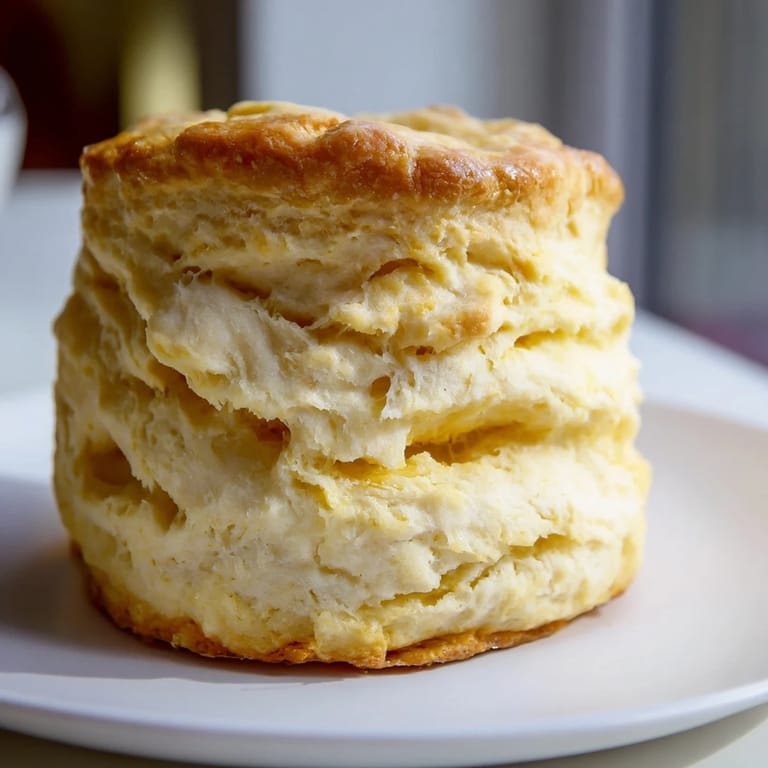
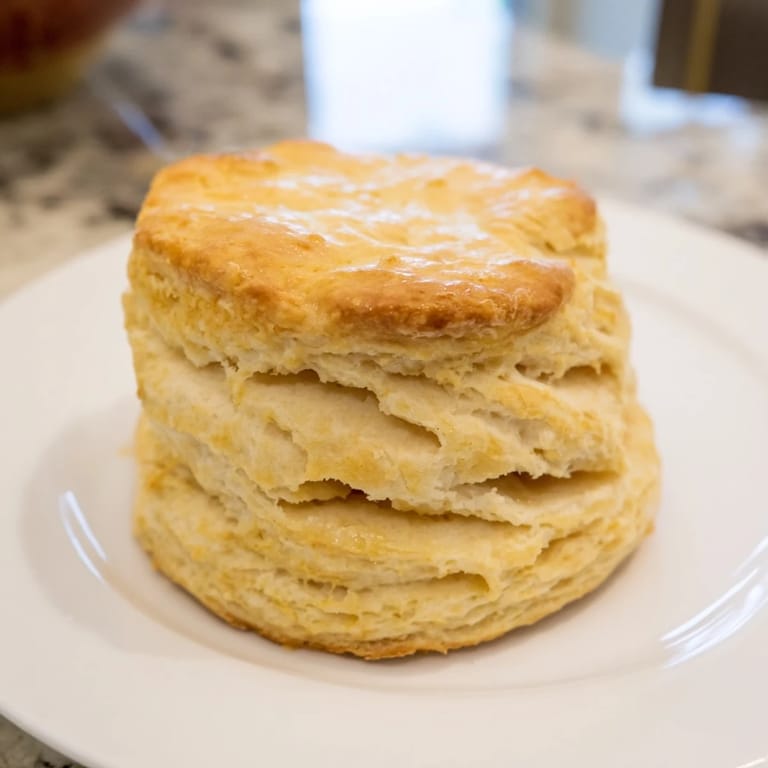
Save There's a specific moment when you pull biscuits from the oven and they've risen taller than you expected, steam escaping into your kitchen, and you realize you've just made something that tastes like home in whatever form home takes for you. That's when these stop being just breakfast and become something that brings people back to your table.
The Buttermilk Secret
Buttermilk is acidic, and that acidity reacts with the baking soda to create lift and tenderness you can't replicate with regular milk and a pinch of lemon juice, though that substitute works in a pinch. If you don't have buttermilk on hand, combine ¾ cup of milk with 2 teaspoons of lemon juice or vinegar, let it sit for 5 minutes to curdle slightly, and it'll do almost the same job—not quite perfect, but honest and true enough.
Variations and Flavor Additions
Once you've mastered the basic biscuit, you can start playing—add ½ cup of grated sharp cheddar for a savory kick, fold in fresh herbs like thyme or chives, or dust them with black pepper and fleur de sel before baking. I've made herb versions for dinner and cheddar ones for breakfast, and both times people asked for the recipe before they'd even finished their first biscuit.
Serving and Storage
Warm biscuits with softened butter and jam are breakfast goals, but they're equally at home alongside fried chicken and gravy, or split and filled with sausage and cheese for something more substantial. Fresh biscuits are best within hours of baking, but leftovers can be wrapped and kept for a couple of days, or frozen for up to three months and reheated gently to bring back that fresh-baked texture.
- Serve them warm for maximum texture and butter-melting magic.
- Split and toast day-old biscuits to refresh them if you can't eat them fresh.
- Make a batch on Sunday and you'll find yourself inventing reasons to have people over all week.
 Save
Save There's really nothing quite like a proper buttermilk biscuit—golden, flaky, and simple enough that the quality of your ingredients and your restraint with your hands are the only things standing between you and something truly special. Once you nail them, you'll find yourself making them constantly.
Recipe FAQ
- → What makes these biscuits flaky?
The layering technique with cold butter folded multiple times into the dough creates distinct flaky layers once baked.
- → Can I substitute buttermilk?
Yes, mix ¾ cup milk with 2 teaspoons lemon juice or vinegar, let sit for 5 minutes, then use as a buttermilk replacement.
- → How should I store leftover biscuits?
Store in an airtight container at room temperature for up to 2 days or freeze for longer storage. Reheat before serving.
- → Why is it important not to overmix the dough?
Overmixing develops gluten, leading to tougher biscuits. Gentle mixing keeps the texture tender and flaky.
- → Can I add flavors to the dough?
Yes, adding grated cheddar, fresh herbs, or a pinch of black pepper enhances flavor and adds a savory note.