 Save
Save There's something about the smell of butter hitting a hot pan that makes everything feel possible on a lazy Sunday morning. I learned to make French toast the way my roommate taught me years ago—not from a recipe, but from watching her move through the kitchen with such ease, cracking eggs into a bowl while humming to herself. She said the secret was patience: letting the bread drink in the custard without drowning it, then waiting for that perfect golden moment when the edges turn crispy and the inside stays soft. That first plate she made me changed how I think about breakfast entirely.
I made this for my sister the morning after she'd had a rough week, and watching her face light up at that first bite reminded me that sometimes the simplest gestures matter most. She asked for the recipe immediately, which meant she was really asking if I cared enough to teach her. Now it's become our thing—whenever we're both home, we make it together, usually while catching up on everything we've missed.
Ingredients
- Eggs (4 large): These are your custard base, so using fresh eggs gives you better structure and a richer color in the pan.
- Whole milk (1 cup): The fat content matters here—it creates that silky coating that makes French toast special, so don't skip it for skim.
- Heavy cream (2 tbsp, optional): This is the move if you want something closer to restaurant quality, adding a luxurious richness that regular milk alone can't quite achieve.
- Granulated sugar (1 tbsp): Just enough sweetness to enhance without making the custard cloyingly sweet.
- Pure vanilla extract (1 tsp): The difference between good and forgettable French toast often comes down to this small splash.
- Ground cinnamon (1/2 tsp, optional): A pinch transforms the whole character of the dish—warm, nostalgic, almost comforting.
- Salt (pinch): This tiny amount amplifies all the other flavors, making everything taste more like itself.
- Day-old brioche, challah, or thick white bread (8 slices): Stale bread is your friend here—it soaks up the custard without turning to mush the way fresh bread would.
- Unsalted butter (2 tbsp): Use real butter for the best flavor and that golden-brown crust you're after.
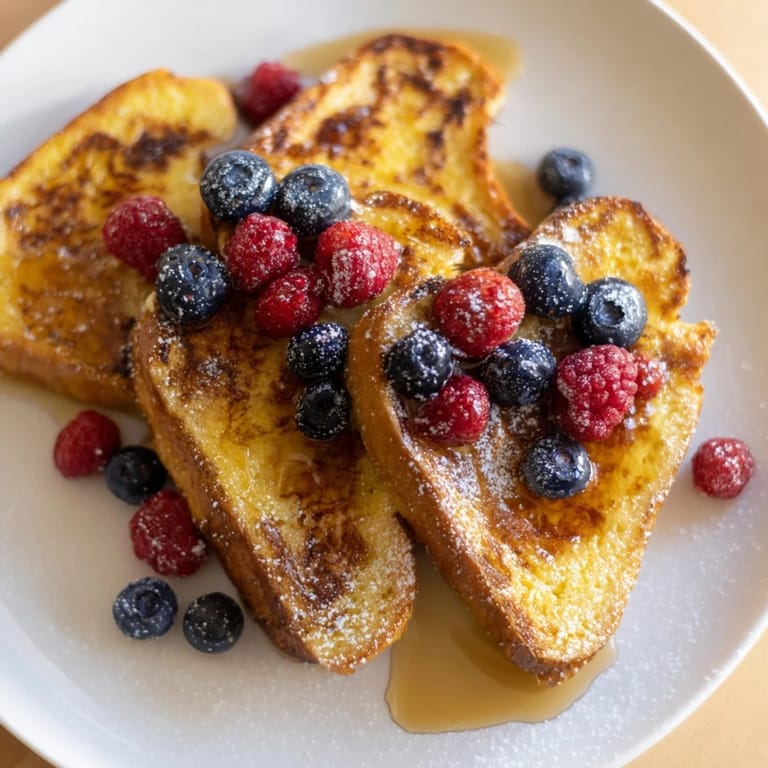
- Maple syrup, powdered sugar, fresh berries (for serving): These are your finishing touches, so use what makes you happy.
Tired of Takeout? 🥡
Get 10 meals you can make faster than delivery arrives. Seriously.
One email. No spam. Unsubscribe anytime.
Instructions
- Mix your custard:
- Whisk together the eggs, milk, heavy cream if using, sugar, vanilla, cinnamon, and salt until everything is fully combined and the mixture looks smooth. This is where patience pays off—give it a good 30 seconds of whisking to make sure the sugar dissolves completely.
- Heat your pan:
- Get a large non-stick skillet or griddle over medium heat and let it warm for a minute, then add a tablespoon of butter and let it melt until it's foamy and just starting to smell nutty. You'll know it's ready when it stops sizzling so aggressively.
- Dip and pan-fry:
- Take each slice of bread and dip it into the custard—count to two on each side, no more. Too much time and the bread falls apart, too little and it stays dry inside. Place it gently onto the hot butter and let it cook for 2 to 3 minutes until the bottom is deep golden and crispy, then flip carefully and do the same on the other side.
- Keep the rhythm going:
- As you finish each batch, transfer it to a serving plate and keep going with the rest of the bread, adding more butter to the pan as needed. The key is not overcrowding the pan—you want space around each slice so the heat can do its job.
- Finish and serve:
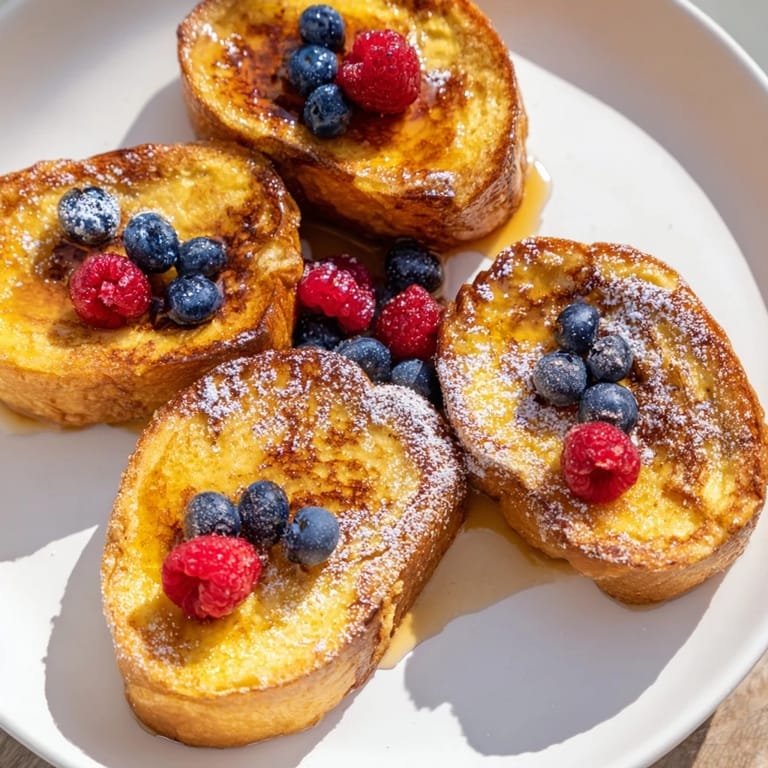
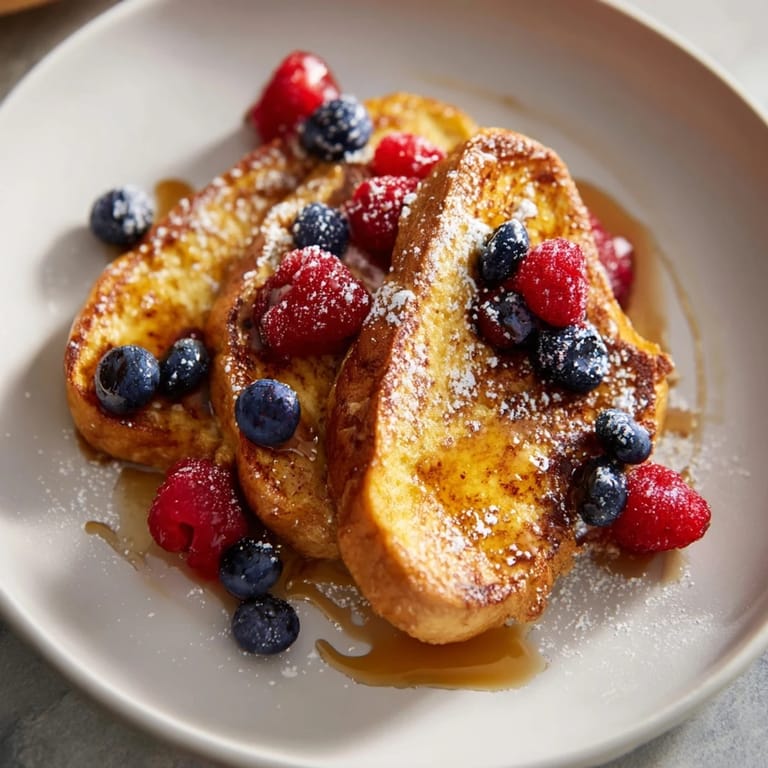
- Serve everything while it's still warm, topped with a generous pour of maple syrup, a light dust of powdered sugar if you want, and whatever fresh fruit is calling to you.
 Save
Save There was a morning when my nephew asked me if I loved cooking, and I realized I was making French toast while telling him stories about his parents as kids, and it hit me that this dish had become a way of passing something down. It wasn't just about breakfast anymore—it was about connection, about making someone feel cared for through something warm and golden.
Why This Dish Works
French toast succeeds because it's fundamentally forgiving—it takes ordinary ingredients and transforms them through technique and timing into something that feels special. The custard coating is what makes it work; it seals the bread while cooking, keeping the inside tender while the butter creates that essential crispy edge. It's the kind of dish that tastes impressive but requires almost nothing in terms of skill, which is probably why it's been around for centuries.
Flavor Variations to Try
Once you've made this basic version a few times, you'll start getting ideas about how to shift it slightly depending on your mood or what's in your kitchen. I've added orange zest for brightness, a splash of rum or bourbon for depth, or even a teaspoon of cardamom for something more unexpected. The structure stays the same, but suddenly you've got a completely different breakfast that still feels effortless.
Making It Your Own
The beauty of French toast is that it's as simple or elaborate as you want it to be—you can serve it plain with just syrup, or build it into something more with whipped cream, fresh fruit compote, or even savory toppings if that's where your head is. I've made it dairy-free for friends using oat milk and coconut oil, and it worked beautifully. The lesson I've learned is that this recipe is less of a rigid formula and more of a foundation you can trust.
- If you're making this ahead for a crowd, you can assemble everything up to the dipping stage and cook just before serving for the best texture.
- Leftover French toast reheats surprisingly well in a 350°F oven for about 5 minutes, which means you can make extra without guilt.
- The custard mixture keeps in the fridge for a couple of days, so you could even prep it the night before and just cook in the morning.
 Save
Save There's something quietly perfect about a plate of French toast on a morning when you don't need to be anywhere else. It's one of those meals that reminds you that good food doesn't need to be complicated to be completely worth your time.
Recipe FAQ
- → What bread works best for this dish?
Day-old brioche, challah, or thick white bread absorb the custard well without becoming soggy.
- → How do I prevent the bread from getting too soggy?
Soak the bread briefly on each side; a quick dip ensures it remains custardy but intact during cooking.
- → Can I add spices for extra flavor?
Yes, ground cinnamon is suggested, and orange zest can enhance the flavor profile nicely.
- → What cooking fat is recommended?
Unsalted butter adds richness and helps achieve a golden crust on the bread slices.
- → Are there dairy-free options available?
Substituting plant-based milk and butter makes it suitable for dairy-free preferences without compromising flavor.
- → How should this dish be served?
Serve warm with maple syrup, a dusting of powdered sugar, and fresh berries for a balanced sweetness and freshness.