 Save
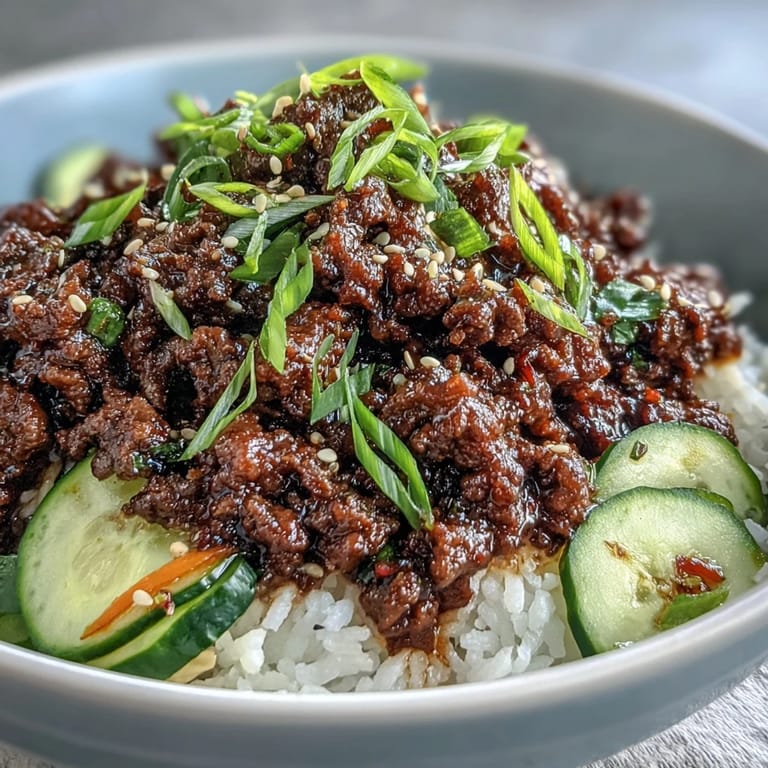
Save My coworker brought a Korean beef bowl to lunch one Tuesday, and I watched her demolish it in five minutes flat, sauce dripping onto her keyboard—which she didn't even care about. That's when I knew I had to learn how to make this. What struck me wasn't just how good it smelled, but how she'd thrown it together that morning in under thirty minutes. I've been making it ever since, and it's become my go-to when I need something that feels restaurant-quality but doesn't demand hours in the kitchen.
I made this for my sister during a chaotic Thursday when she'd had a rough week, and she sat at my kitchen counter just breathing in the steam from her bowl before even tasting it. Something about the warmth of the rice, the brightness of the fresh vegetables, and that complex sauce made her shoulders drop about an inch. It reminded me that good food isn't about impressing anyone—it's about showing up for people when they need it.
Ingredients
- Ground beef (1 lb): Lean meat works beautifully here because it won't leave pools of grease in your sauce, and the meat absorbs all those Korean flavors like a sponge.
- Gochujang (2 tablespoons): This fermented chili paste is the soul of the dish—find it in the Asian aisle or online, and don't substitute it with regular chili powder or you'll lose that complex, funky depth.
- Soy sauce (3 tablespoons): Use low-sodium unless you're seasoning for a crowd; tamari works seamlessly if you're avoiding gluten.
- Brown sugar (2 tablespoons): This balances the heat and saltiness, creating that addictive sweet-savory-spicy trifecta that makes people keep coming back to their bowl.
- Sesame oil (1 tablespoon): A little goes a long way—this is toasted sesame oil, not the neutral kind, and it's what gives the sauce that authentic Korean restaurant flavor.
- Garlic and ginger (2 cloves and 1 teaspoon): Fresh versions make all the difference; minced garlic and grated ginger release their aromatic oils more effectively than bottled.
- Rice vinegar (1 tablespoon): The acidity cuts through richness and adds a subtle brightness that keeps the sauce from tasting one-dimensional.
- Rice or cauliflower rice (4 cups cooked): Your choice here determines whether this is comfort food or a low-carb weeknight staple.
- Fresh toppings (cucumber, carrot, green onions, sesame seeds): These aren't just garnish—they're textural contrast and freshness that make each spoonful interesting.
Tired of Takeout? 🥡
Get 10 meals you can make faster than delivery arrives. Seriously.
One email. No spam. Unsubscribe anytime.
Instructions
- Heat your skillet and sear the beef:
- Pour sesame oil into a large skillet over medium-high heat and let it shimmer for about 30 seconds. Add the ground beef in one clump, then break it apart with your spatula as it browns, listening for that satisfying sizzle—it should take 4 to 5 minutes until no pink remains and the meat has some color.
- Build the aromatic base:
- Once the beef is cooked through, add your minced garlic and grated ginger, stirring constantly for about 1 minute so they perfume the whole pan without burning. You'll know it's ready when the raw garlic smell transforms into something warm and toasty.
- Combine the sauce and simmer:
- Stir in the gochujang, soy sauce, brown sugar, rice vinegar, and black pepper all at once, mixing until the gochujang dissolves into the liquid and coats every piece of beef. Let it bubble gently for 2 to 3 minutes, stirring occasionally, until you see the sauce thicken slightly and cling to the meat—this is when you know the flavors have melded.
- Taste and adjust:
- Dip a clean spoon into the sauce and taste it critically; if it needs more salt, add a pinch of soy sauce, or if you want more heat, this is the moment to add extra gochujang or a dash of sriracha. Trust your palate—you're looking for a balance where you can taste the heat, the sweetness, and the savory depth equally.
- Assemble your bowls:
- Divide your cooked rice among four bowls, making a little well in the center, then spoon the beef and all its sauce over the top. The heat from the rice will warm everything through and help the flavors settle.
- Top and serve immediately:
- Arrange your cucumber slices, shredded carrot, sliced green onions, and a sprinkle of toasted sesame seeds over each bowl, adding fresh red chili slices or a spoonful of kimchi if you want extra brightness or funk. Serve right away while the rice is still steaming and the vegetables are still crisp.
 Save
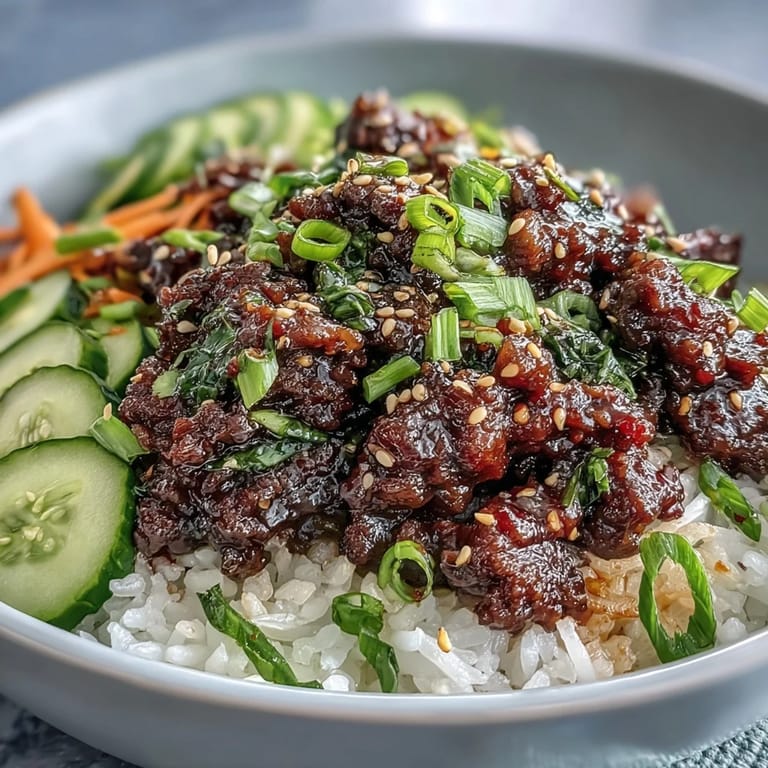
Save The first time someone told me this bowl reminded them of eating in Seoul, I felt something shift in my kitchen—like I'd accidentally created a small portal to somewhere else. Food does that sometimes: it carries memory and place and feeling, all in one bowl.
Customizing Your Bowl
This dish thrives on flexibility because life is messy and your fridge won't always have what the recipe calls for. I've made it with ground turkey when beef was out of stock, and honestly, it's lighter and just as satisfying. Swap the rice for quinoa if you want extra protein, or use cauliflower rice if you're tracking carbs that week—the sauce is so flavorful it transforms whatever base you choose.
The Vegetable Game
Those fresh toppings aren't decorative; they're what keep this dish from feeling heavy or one-note. A handful of cilantro works beautifully if you have it, and I once threw in some thinly sliced radish in a moment of desperation and it became a permanent addition—the peppery crunch was exactly what I didn't know I needed. Red pepper, baby spinach, or even shredded daikon work too, so think of the suggested vegetables as a starting point rather than gospel.
Storage and Make-Ahead Tips
The beef portion keeps in an airtight container in the fridge for up to three days, which means you can cook the sauce on Sunday and have weeknight dinners that feel homemade without the stress. I usually store the toppings separately in a big container so they stay crisp, then assemble fresh bowls each day—it takes two minutes and tastes infinitely better than reheated vegetables. Reheat the beef gently in a skillet over low heat with a splash of water if it's dried out, and always prep your rice fresh or warm it up just before serving.
- Make the sauce in double batches when you have time and freeze it flat in a zip-top bag for up to a month of emergency dinners.
- Toast your sesame seeds in a dry skillet for about 2 minutes just before serving—the difference between raw and toasted seeds is the difference between okay and magnificent.
- If you're meal prepping, assemble everything except the fresh toppings into containers the night before, then add the vegetables and seeds right before eating so nothing gets soggy.
 Save
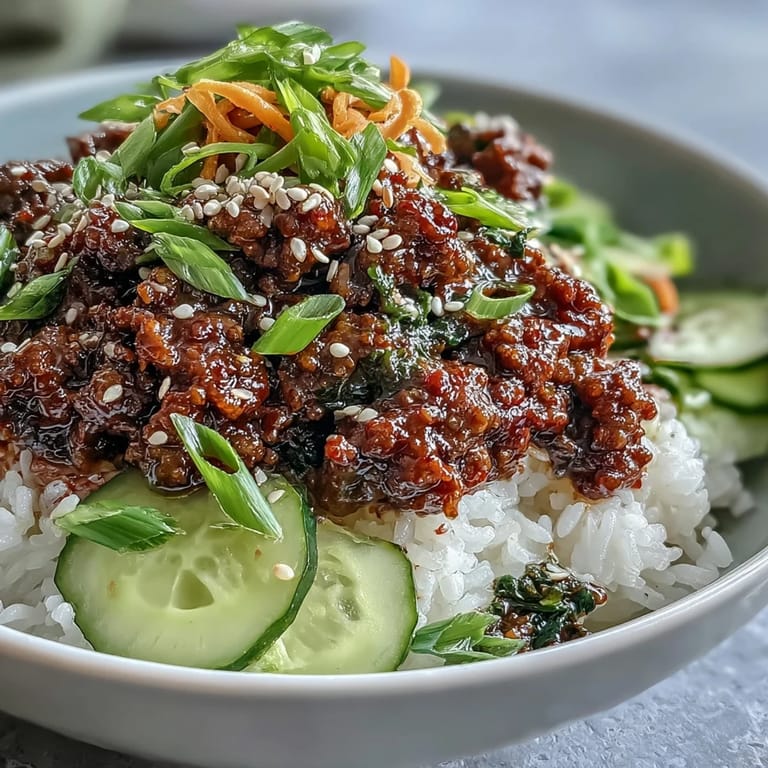
Save This bowl has quietly become one of those dishes I make without thinking, the way some people make pasta or scrambled eggs. It's fast, it's forgiving, and somehow it always feels like you put in more effort than you actually did.
Recipe FAQ
- → What does gochujang taste like?
Gochujang delivers a complex sweet-spicy flavor with fermented umami depth. The Korean chili paste combines red pepper powder, glutinous rice, fermented soybeans, and salt for a rich, slightly sweet heat that builds gradually.
- → Can I make this spicier?
Increase gochujang amount or add sliced fresh chilies, sriracha, or Korean red pepper flakes. Start with an extra teaspoon and adjust to your preferred heat level.
- → Is cauliflower rice a good substitute?
Absolutely. Cauliflower rice works beautifully for a low-carb version, absorbing the savory sauce while keeping the dish light. Simply rice fresh cauliflower or use frozen for convenience.
- → How long does this keep in the refrigerator?
Store cooked beef and rice separately in airtight containers. The beef stays fresh for 3-4 days, while rice keeps 4-5 days. Reheat gently and add fresh garnishes before serving.
- → Can I freeze the beef mixture?
Yes, the seasoned ground beef freezes well for up to 3 months. Cool completely, portion into freezer bags, and thaw overnight in the refrigerator before reheating.