 Save
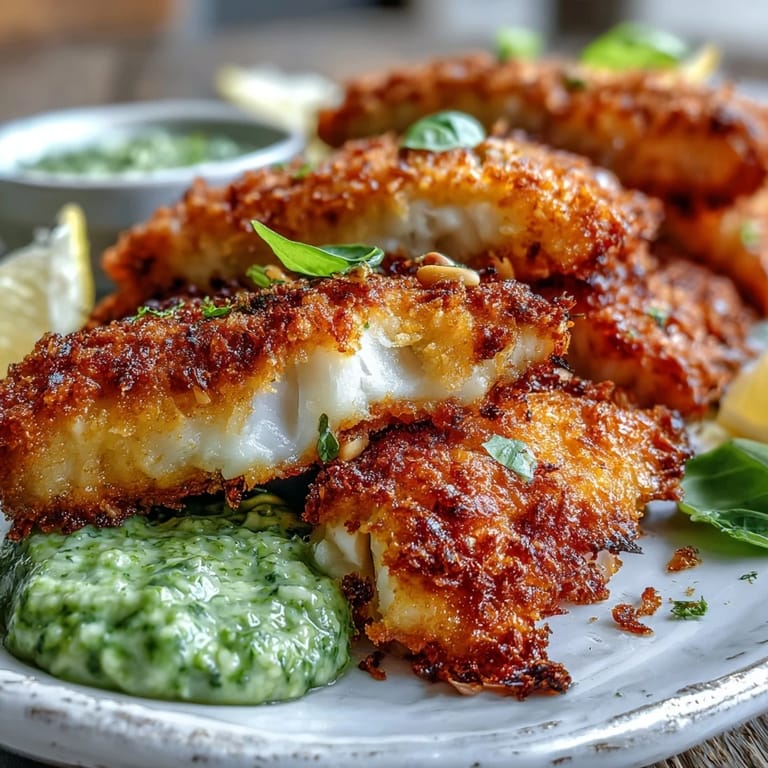
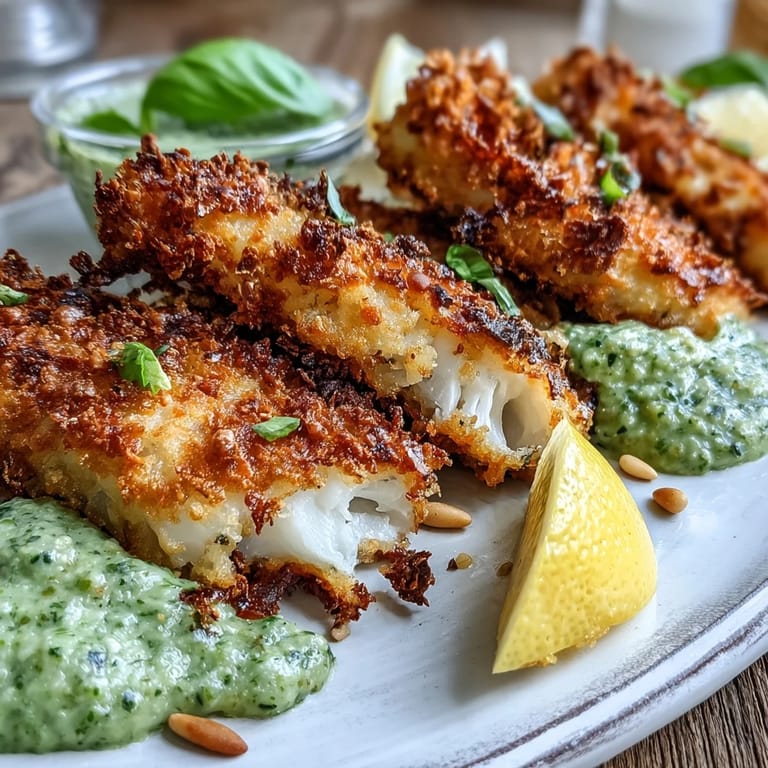
Save My flatmate once called these fancy fish fingers, and honestly, she wasnt wrong. I started making them on a rainy Thursday when I had haddock that needed using and half a bag of frozen peas looking sorry for themselves in the freezer. The Parmesan in the crust was a last-minute idea, something I saw in a magazine photo and thought why not. That first batch came out so ridiculously golden and crunchy that I stood at the counter eating three straight from the tray before I even plated up.
I made these for my sister when she visited with her kids, thinking theyd be a safe bet for fussy eaters. The children devoured them, dipping every last piece into the pesto like it was ketchup. My sister looked at me with genuine surprise and asked for the recipe on the spot. It was one of those small proud moments where something simple just works, and everyone leaves happy.
Ingredients
- Skinless haddock fillets (500 g, cut into strips): Haddock has a delicate sweetness that holds up well to baking, but cod or pollock work just as nicely if thats what you find fresh.
- Plain flour (60 g): The first layer that helps the egg stick, creating that all-important coating foundation.
- Large eggs (2, beaten): Acts as the glue between flour and breadcrumbs, so beat them well until smooth.
- Panko breadcrumbs (80 g): Lighter and crunchier than regular crumbs, panko gives that restaurant-style texture without any frying.
- Finely grated Parmesan cheese (50 g): This is where the magic happens, adding salty, nutty flavour and helping the crust turn deeply golden.
- Freshly ground black pepper (½ tsp): Just enough to add a gentle warmth without overpowering the fish.
- Sea salt (½ tsp): Seasons the crust from the inside out.
- Smoked paprika (½ tsp, optional): A subtle smokiness that makes the flavour more complex, though you can leave it out if you prefer things simple.
- Frozen peas (200 g): They blanch in minutes and turn into the sweetest, brightest pesto base.
- Fresh basil leaves (30 g): Brings that classic herby freshness, and the smell when you blitz it is glorious.
- Parmesan cheese for pesto (25 g, grated): Adds creaminess and savoury depth to balance the peas.
- Small garlic clove (1): One is plenty, it just hums in the background without shouting.
- Pine nuts (30 g): Traditional and buttery, but sunflower seeds work brilliantly if nuts are an issue.
- Extra-virgin olive oil (4 tbsp): Brings everything together into a silky, spoonable pesto.
- Juice of ½ lemon: Cuts through the richness and makes the whole thing sing.
- Lemon wedges and mixed salad leaves (for serving): A squeeze of lemon at the table and some crisp leaves make it feel like a proper meal.
Tired of Takeout? 🥡
Get 10 meals you can make faster than delivery arrives. Seriously.
One email. No spam. Unsubscribe anytime.
Instructions
- Preheat and Prepare:
- Set your oven to 200°C (180°C fan) or 400°F and line a baking sheet with parchment paper. This stops any sticking and makes cleanup so much easier.
- Set Up Your Coating Station:
- Get three shallow bowls ready, one with flour, one with beaten eggs, and one with the panko mixed with Parmesan, pepper, salt, and paprika if using. Having them in a row makes the whole process smooth and quick.
- Coat the Haddock Strips:
- Take each piece of fish, dust it in flour, dip it into the egg until fully covered, then press it gently into the Parmesan-panko mix. Lay them on the baking sheet without crowding, so they crisp up evenly.
- Bake Until Golden:
- Lightly spray or drizzle the goujons with a little olive oil, then bake for 15 to 20 minutes, flipping them halfway through. Theyre done when theyre golden, crisp, and the fish flakes easily.
- Make the Pea Pesto:
- While the fish bakes, blanch the peas in boiling water for 2 minutes, then drain and run them under cold water to keep that bright green colour. Blitz them in a food processor with basil, Parmesan, garlic, pine nuts, olive oil, and lemon juice until mostly smooth but still a bit textured, then season to taste.
- Serve and Enjoy:
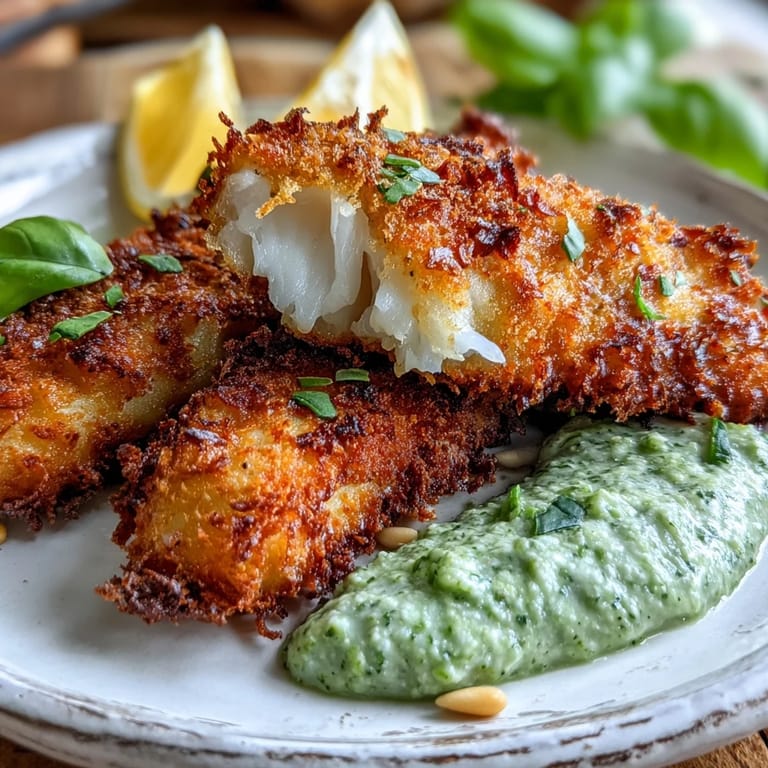
- Plate up the hot goujons with a generous dollop of pea pesto, lemon wedges on the side, and maybe some salad leaves if youre feeling virtuous.
 Save
Save The first time I served these at a casual dinner, someone said they tasted like something youd pay good money for at a seaside bistro. I laughed, but it stuck with me. Theres something about the combination of that crunchy, cheesy crust and the fresh, vibrant pesto that just feels special, even when youre eating it in your kitchen on a weeknight.
Choosing Your Fish
Haddock is my go-to because its widely available and has a lovely mild flavour, but cod and pollock are brilliant alternatives if you find them fresher or cheaper. The key is to cut the fillets into even strips so they cook at the same rate. I usually aim for pieces about the size of a grown-up finger, maybe slightly bigger. If the fish is very wet, pat it dry with kitchen paper before you start coating, it helps everything stick better.
Getting the Crust Just Right
The secret to a truly crisp crust is the panko and Parmesan mix, and making sure each piece gets a good press into the crumbs so they really stick. I learned the hard way that if you rush this step, bits of the coating fall off in the oven and you lose that satisfying crunch. Also, dont be shy with the oil spray or drizzle, it encourages browning and makes the Parmesan turn into those golden, almost lacy bits that taste incredible.
Making the Pesto Work for You
Pea pesto is one of those things that sounds fancy but comes together in minutes, and its a brilliant way to use up frozen peas. The blanching step is important, it softens them just enough to blend smoothly without turning mushy. I like to leave a bit of texture rather than blitzing it to a paste, it feels more vibrant and interesting.
- Taste as you go and adjust the lemon juice, it can vary depending on how sweet your peas are.
- If the pesto feels too thick, add a splash of the blanching water or extra olive oil to loosen it up.
- Leftover pesto keeps in the fridge for a couple of days and is gorgeous stirred through pasta or spread on toast.
 Save
Save These goujons have become one of those recipes I turn to when I want something satisfying without spending ages in the kitchen. Theyre impressive enough to serve to friends but comforting enough to make just for yourself on a quiet evening.
Recipe FAQ
- → Can I use a different type of fish?
Yes, cod or pollock work excellently as substitutes for haddock. Choose firm white fish fillets that hold their shape when cut into strips.
- → How do I make this gluten-free?
Simply replace the plain flour with gluten-free flour and use gluten-free breadcrumbs instead of panko. The Parmesan crust will still be wonderfully crispy.
- → Can I prepare the pea pesto in advance?
Absolutely. The pea pesto can be made up to 2 days ahead and stored in an airtight container in the refrigerator. Drizzle a thin layer of olive oil on top to prevent browning.
- → What can I substitute for pine nuts?
Toasted sunflower seeds make an excellent nut-free alternative that maintains the pesto's texture and nutty flavor. Toasted almonds or walnuts also work well if allergies aren't a concern.
- → Can I fry these instead of baking?
Yes, you can shallow fry the goujons in vegetable oil over medium-high heat for 3-4 minutes per side until golden and cooked through. Drain on paper towels before serving.
- → What sides pair well with this dish?
Serve with crispy oven chips, roasted new potatoes, or a fresh mixed green salad. Steamed vegetables like green beans or tenderstem broccoli also complement the flavors beautifully.