 Save
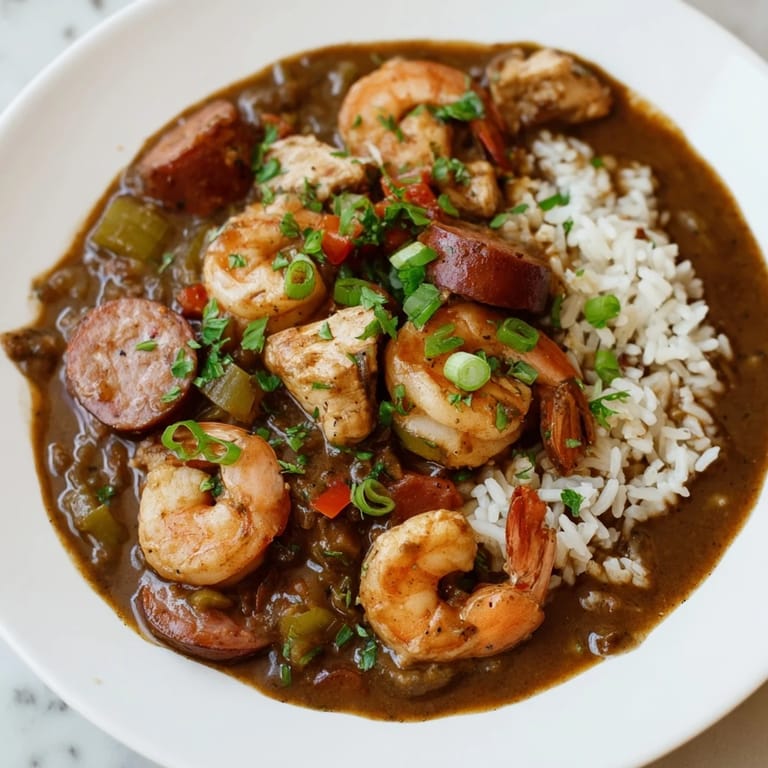
Save My first real gumbo came together on a rainy Saturday when my neighbor wandered over with a bag of andouille sausage from the farmers market and a story about learning to cook in New Orleans. I'd never made a proper roux before—just dumped flour into fat and hoped for the best—but watching him stir that pot for twenty minutes, patient and unhurried, while the kitchen filled with the most incredible nutty-brown smell, changed how I understood building flavor. That day taught me that gumbo isn't rushed; it's a conversation between your ingredients and time.
I'll never forget serving this to a table of eight people—some from Louisiana, some trying gumbo for the first time—and seeing everyone fall silent for that first spoonful. The person next to me closed their eyes, and later told me it tasted like memory. That's when I realized gumbo carries weight beyond the bowl; it's woven into someone's history, their grandmother's kitchen, their whole identity. Respecting that while making it your own is the real craft.
Ingredients
- Andouille sausage: This smoky, spiced pork is the backbone—it seasons the entire pot as it cooks, so quality matters here.
- Chicken thighs: They stay tender through long simmering where white meat would turn stringy; don't skip this choice.
- Shrimp (optional): Add these only at the very end or they'll turn rubbery and lose their sweetness.
- Onion, bell pepper, celery: The holy trinity—this combo is non-negotiable in Louisiana cooking, building the aromatic base everything else rests on.
- Garlic: Minced fine and added after the trinity so it doesn't scorch in the roux.
- Tomatoes: Fresh or canned both work; they add brightness and acid to balance the richness.
- Vegetable oil and all-purpose flour: Equal parts by volume create the roux—this is where patience becomes your most important ingredient.
- Chicken or seafood stock: The liquid carries all the flavors, so taste it first and choose accordingly.
- Bay leaves, thyme, smoked paprika: These three are the seasoning trinity; they create that warm, layered depth you crave in every spoonful.
- Cayenne and black pepper: Build heat gradually and adjust to your preference—gumbo should make you feel it but not regret it.
- Worcestershire and hot sauce: These add savory umami and a final kick; they're the finishing flourish.
- Filé powder: Traditional thickener made from sassafras, adds earthy flavor—stir in at the end only.
Tired of Takeout? 🥡
Get 10 meals you can make faster than delivery arrives. Seriously.
One email. No spam. Unsubscribe anytime.
Instructions
- Prep everything first:
- Mise en place isn't just fancy talk—your roux waits for no one, so have onions, peppers, celery, garlic, and everything else ready to go before heat hits the pan.
- Build the roux:
- Heat oil over medium heat, whisk in flour gradually, and stir constantly for 15–20 minutes until it's the color of deep chocolate—not burnt, just deeply caramelized. Your arm will get tired; this is intentional. The smell will tell you when you're close to perfect.
- Cook the holy trinity:
- Add onion, pepper, and celery to the roux; the sizzle and the way the vegetables soften tells you the foundation is solid. Stir often for about 5 minutes until they smell sweet and tender.
- Add garlic briefly:
- One minute is all garlic needs before it can turn bitter; the moment it's fragrant, move forward.
- Brown the meats:
- Sausage and chicken go in next; cook them for about 5 minutes until they've picked up color and released their oils into the pot. This is flavor you can't get any other way.
- Build the broth:
- Stir in tomatoes, bay leaves, thyme, paprika, cayenne, salt, and pepper; let them marry together for a moment before adding stock. Pour stock in slowly while stirring to make sure the roux incorporates smoothly without lumps.
- Simmer low and long:
- Bring to a gentle boil, then drop the heat to low and let it bubble softly uncovered for 45 minutes. Stir occasionally and listen—that gentle simmer is doing the real work, melding flavors and tenderizing everything.
- Add shrimp if using:
- During the last 10 minutes, add shrimp; they'll turn pink and opaque in just a few minutes. Overcooked shrimp is the only real mistake you can make here.
- Finish and season:
- Stir in Worcestershire and hot sauce, taste, and adjust salt and pepper. The gumbo should taste bold and balanced, never muddled.
- Thicken with filé if desired:
- Remove from heat, stir in ½–1 teaspoon filé powder if you like. Never boil it after adding filé or it turns stringy.
 Save
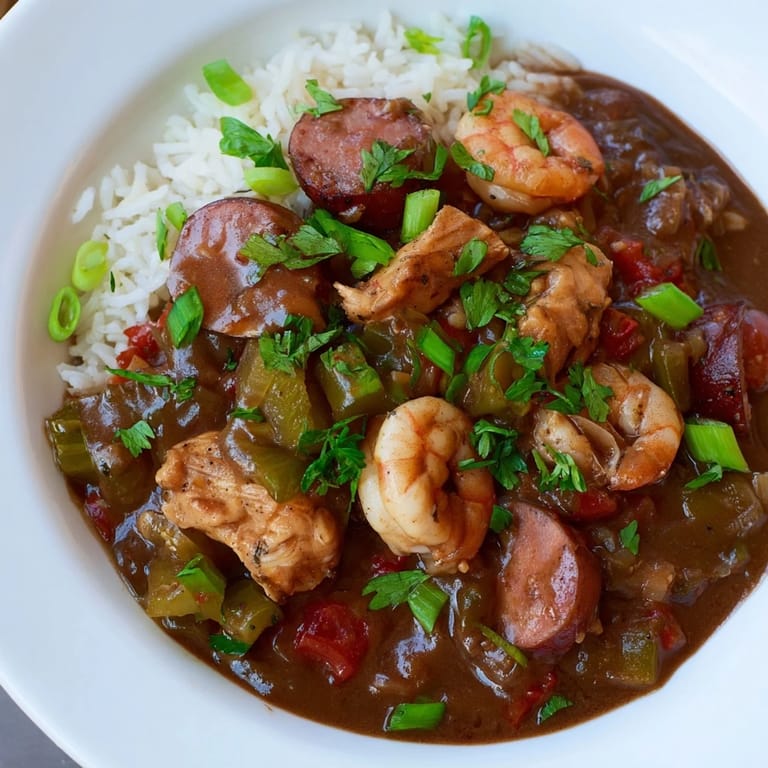
Save There's a moment midway through simmering when the kitchen smells so good you stop caring about the clock and just lean against the counter, watching the pot bubble gently. That's when you know you've built something worth the time. Gumbo rewards patience with a kind of comfort that reaches beyond hunger.
When to Use Seafood vs. Meat
The original recipe balances sausage and chicken beautifully, but gumbo is flexible once you understand the base. A seafood-only version using shrimp, crab, and oysters changes everything—it becomes lighter, brighter, with more mineral sweetness. If you go that route, use seafood stock instead of chicken, skip the long simmer (20 minutes is enough), and add shrimp and oysters in the last few minutes so they don't toughen. Either way, the roux and the holy trinity stay the same, grounding whatever proteins you choose.
Serving and Pairing
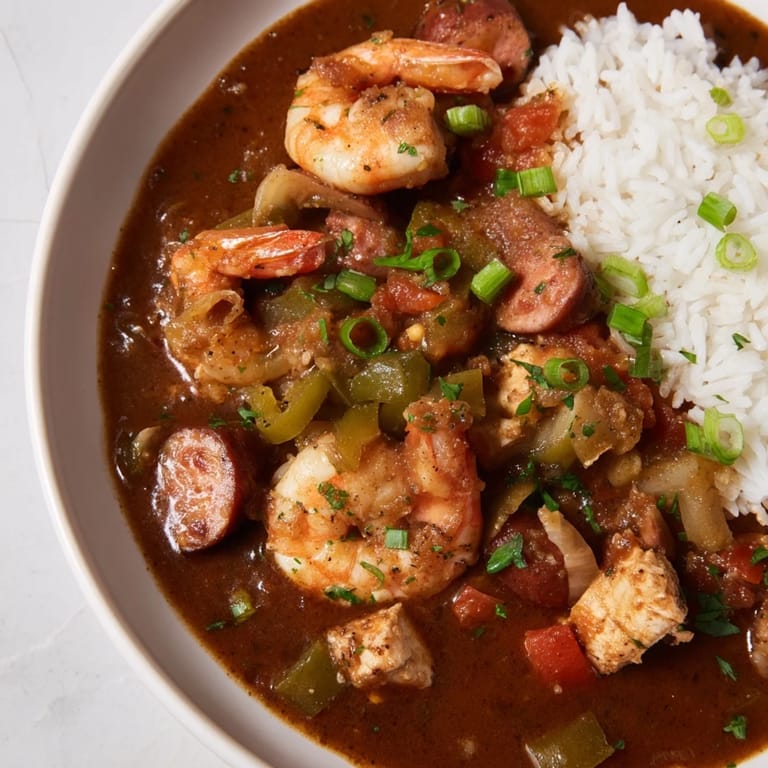
Gumbo lives on rice—the way the broth soaks in, how the rice softens just enough to hold flavor, makes them inseparable. Serve with a crisp lager if you want to cool the heat, or a chilled white wine to echo the brightness. Set out hot sauce on the side so people can dial up the fire to their own taste, and fresh scallions and parsley finish it with color and freshness you can taste.
Storage, Freezing, and Leftovers
This is the kind of food that gets better as it sits—flavors deepen, everything integrates more. Refrigerate leftovers for up to four days, or freeze in portions for up to three months; thaw overnight in the fridge and reheat gently on the stove until it's steaming. Filé powder should only be added fresh, not before freezing.
- Always cool gumbo to room temperature before refrigerating to prevent condensation and sogginess.
- Frozen gumbo reheats beautifully on the stove or even in the microwave if you're in a hurry.
- Double the recipe fearlessly—this is one of those dishes that practically begs for extras on hand.
 Save
Save Gumbo is one of those recipes that teaches you something about cooking every time you make it. Respect the roux, listen to the pot, and you'll end up with something that tastes like home, no matter where you're from.
Recipe FAQ
- → What is the key to making a rich gumbo broth?
Developing a deep, dark roux by slowly cooking flour and oil until chocolate brown adds richness and depth. Combining this with aromatic vegetables and seasoned stock creates a flavorful base.
- → How do I prevent the roux from burning?
Stir constantly over medium heat and monitor closely. The roux should turn a deep chocolate brown but not black or burnt, which can impart bitterness.
- → Can I prepare gumbo with only seafood?
Yes, omit the meats and use shrimp, crab, oysters, or fish for a seafood variation. Add seafood near the end to avoid overcooking.
- → What is the role of filé powder in this dish?
Filé powder, made from ground sassafras leaves, is used as a thickener and adds a unique earthy flavor. It’s typically stirred in at the end to avoid stringiness.
- → What side dishes pair well with this gumbo?
Serve with fluffy white rice, and consider pairing with a crisp lager or chilled white wine to complement the bold flavors.
- → How spicy is this gumbo and can I adjust the heat?
The dish includes cayenne and optional hot sauce for a moderate spicy kick. Adjust these to taste for milder or bolder heat levels.