 Save
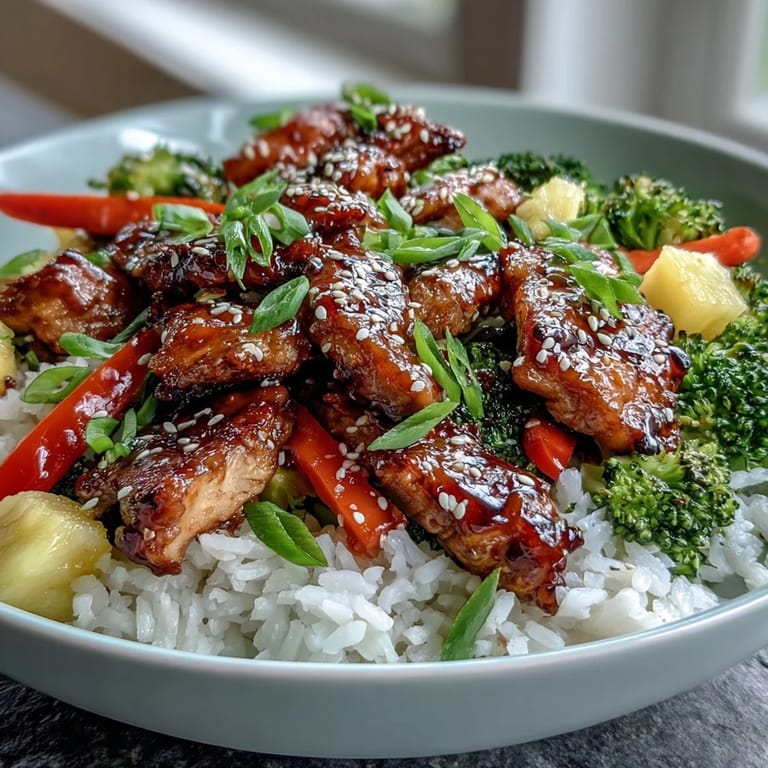
Save My roommate knocked on my kitchen door one Tuesday evening, drawn by the unmistakable sizzle of chicken hitting hot oil and the rich aroma of soy sauce caramelizing in the pan. She asked what I was making, and when I described this teriyaki bowl, her eyes lit up—turns out she'd been craving it for weeks but didn't know where to start. That night, we made four bowls together, and what struck me most wasn't just how quickly it came together, but how the sweet glaze caught the light as it clung to each piece of chicken. It became our Tuesday tradition after that.
I made this for my partner after a particularly brutal day at work, and watching him take that first bite—the way his shoulders relaxed—reminded me why cooking for someone matters. The pineapple garnish added this unexpected tropical brightness that seemed to shift his whole mood, and suddenly we were talking and laughing instead of just eating in silence. Food isn't always just about hunger; sometimes it's about the moment you create around it.
Ingredients
- Boneless, skinless chicken thighs or breasts (1.5 lbs): Thighs stay more tender and forgiving than breasts, but either works—just don't skip cutting them into bite-sized pieces so they cook evenly.
- Soy sauce (1/3 cup): This is your umami backbone; use good quality if you can, as it makes a noticeable difference in depth.
- Mirin (1/4 cup): This sweet rice wine is what gives teriyaki its signature glossiness—don't substitute it with honey alone, as the flavor is distinctly different.
- Brown sugar and honey (2 tbsp each): Together they create layers of sweetness that balance the saltiness beautifully.
- Rice vinegar (1 tbsp): A tiny bit of acid cuts through the richness and keeps the sauce from tasting one-note.
- Garlic and ginger (2 cloves and 1 tsp): Fresh is non-negotiable here—bottled versions won't give you that bright, sharp edge.
- Sesame oil (1 tsp): Just a teaspoon; it's potent and adds that authentic Asian kitchen depth.
- Cornstarch slurry (1 tbsp + 2 tbsp water): This is what transforms loose sauce into that glossy, cling-to-the-chicken coating everyone expects.
- Jasmine or short-grain white rice (2 cups): Jasmine rice has a subtle floral quality that pairs beautifully with teriyaki, but whatever rice you have works fine.
- Mixed vegetables (broccoli, carrots, bell pepper, snap peas): Feel free to swap these based on what's fresh or what you have in your crisper—the important thing is keeping them crisp-tender.
- Fresh pineapple (1 cup diced): The acidity and sweetness here are crucial; canned pineapple won't give you the same textural contrast.
- Scallions and sesame seeds (for garnish): These finish the dish with color and crunch, making it look restaurant-quality.
Tired of Takeout? 🥡
Get 10 meals you can make faster than delivery arrives. Seriously.
One email. No spam. Unsubscribe anytime.
Instructions
- Rinse and start your rice:
- Run your rice under cold water in a fine-mesh strainer, swishing it gently until the water runs clear—this removes excess starch and prevents mushiness. Combine with water and salt in a saucepan, bring to a boil, then drop the heat low, cover, and let it simmer undisturbed for 15 minutes.
- Whisk your teriyaki sauce:
- In a small bowl, combine soy sauce, mirin, brown sugar, honey, rice vinegar, minced garlic, grated ginger, and sesame oil, whisking until the sugar dissolves and everything melds together. This is your flavor foundation, so taste it—it should be balanced between salty and sweet with a subtle ginger bite.
- Get your chicken coating:
- Cut your chicken into roughly bite-sized pieces and place them in a bowl. Pour half of your teriyaki sauce over them, toss to coat evenly, and let them sit while you prep vegetables—this 10-minute window lets the flavors start seeping in.
- Sear your vegetables:
- Heat vegetable oil in a large skillet or wok over medium-high heat until it's shimmering and almost smoking. Add your broccoli, carrots, bell pepper, and snap peas all at once, then stir-fry aggressively for 3 to 4 minutes—you want them bright in color and still crisp when you bite them, not soft.
- Cook the chicken through:
- Push your vegetables to the side of the pan (or remove and set aside). Add your marinated chicken to the same pan and let it sit undisturbed for a minute or two so it gets a nice golden crust. Stir occasionally and cook for 6 to 8 minutes total until cooked through and caramelized in spots.
- Build your glaze:
- Pour the remaining teriyaki sauce into the pan with the cooked chicken. In a small cup, stir your cornstarch with water until it's smooth and lump-free, then pour it into the pan while stirring constantly. Simmer for 2 to 3 minutes and watch as the sauce transforms from thin to glossy and thick enough to coat the back of a spoon.
- Bring it all together:
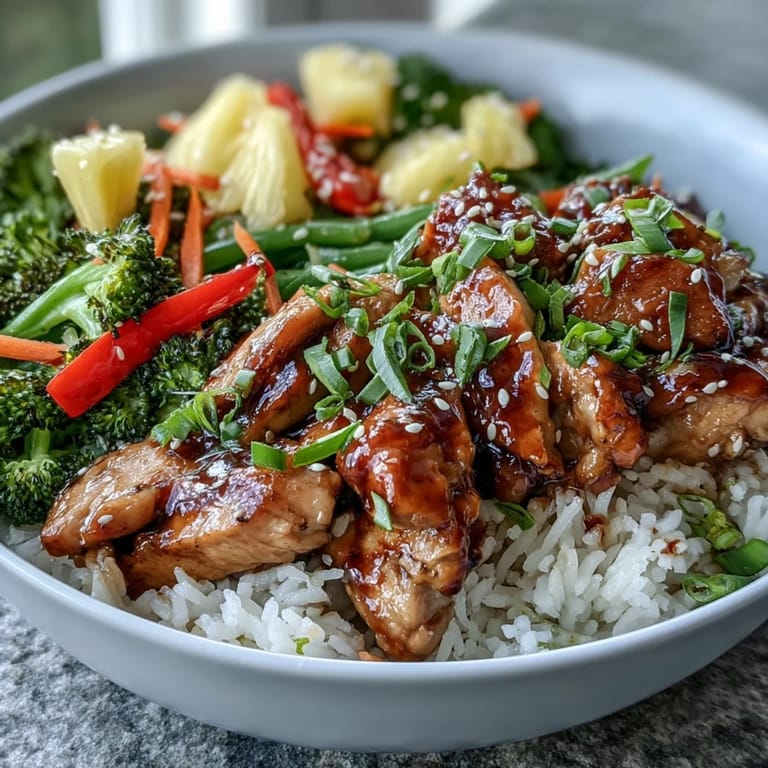
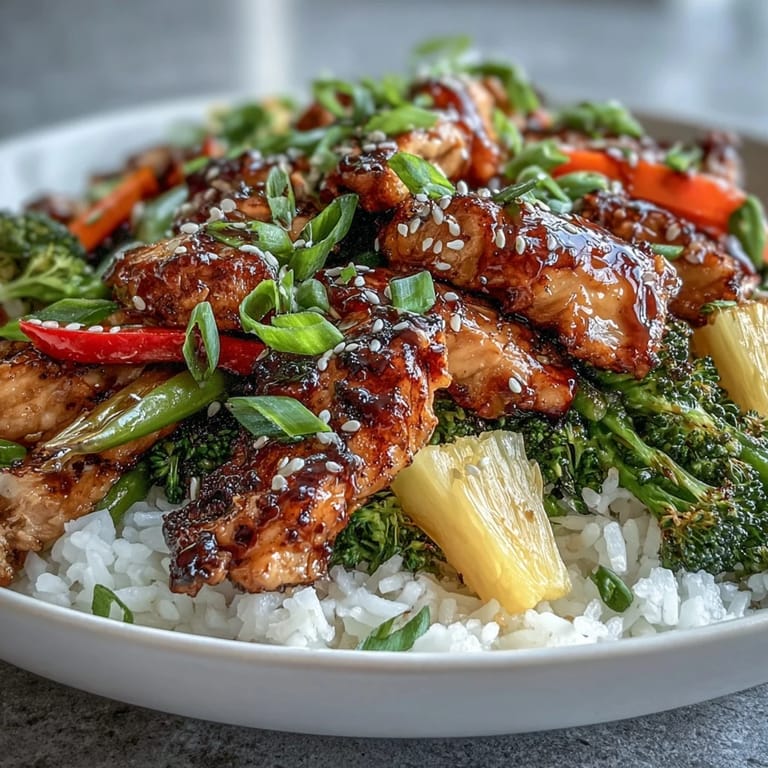
- Fluff your rested rice with a fork and divide it among four bowls. Top each bowl with glazed chicken, your stir-fried vegetables, a generous handful of fresh diced pineapple, a scatter of sliced scallions, and a sprinkle of toasted sesame seeds.
 Save
Save One afternoon, my daughter helped me cook this, and she became obsessed with the texture of the snap peas—the way they snapped between her teeth, how they stayed bright green despite the heat. She ate half the batch before they even made it into a bowl, and instead of being frustrated, I realized that's exactly the point of cooking something like this: it's interactive, hands-on, and genuinely delicious at every stage, not just at the end.
Why Mirin Matters More Than You Think
Mirin is sweet rice wine with a subtle depth that honey just can't replicate—it carries umami and a delicate fermented character that rounds out the sauce beautifully. When I first made this recipe, I was tempted to skip it and just use extra honey, thinking it would be fine, but the resulting sauce tasted flat and one-dimensional, almost like bottled teriyaki from the supermarket. Once I added real mirin, everything clicked into place; the sauce suddenly had complexity and richness that made people ask what my secret was.
The Vegetable Timing Game
Getting vegetables to that perfect crisp-tender point is about confidence and timing rather than precision—you're looking for them to have some resistance when you bite into them, not to be soft or mushy. The key is keeping your heat high and not stirring constantly; let them sit for a beat between stirs so they develop a slight char and caramelize just a touch. I've learned that overcooked vegetables disappear into the bowl, but vegetables with texture are what people remember about a meal.
Make It Your Own
This bowl is beautifully flexible—swap vegetables based on the season, your mood, or what's in your crisper. Mushrooms add earthiness, snap peas bring sweetness, zucchini melts into the sauce, and baby corn gives you a fun textural surprise. The framework stays the same, but your bowl becomes a reflection of what you have and what you're craving that day.
- Try adding a drizzle of sriracha or chili oil for heat if you like things spicy.
- Tofu or tempeh swap in seamlessly for the chicken if you're cooking vegetarian.
- A crisp white wine like Sauvignon Blanc or a light lager pairs surprisingly well with the sweet-savory balance.
 Save
Save This bowl has become the dish I make when I want to feel capable in the kitchen without fussing—it's impressive enough to serve to people you care about, but simple enough that you're not stressed the whole time. There's something really satisfying about a meal that comes together cleanly, tastes genuinely good, and leaves everyone at the table happy.
Recipe FAQ
- → What cut of chicken works best?
Boneless, skinless chicken thighs are ideal because they stay juicy and tender during cooking. Chicken breasts work well too, but be careful not to overcook them as they can dry out more quickly than thighs.
- → Can I make the teriyaki sauce ahead?
Yes, you can whisk the sauce ingredients together and store it in an airtight container in the refrigerator for up to a week. The sauce thickens beautifully when heated with the cornstarch slurry.
- → What vegetables can I use?
Broccoli, carrots, bell peppers, and snap peas provide great color and crunch. You can also add mushrooms, zucchini, baby corn, snow peas, or bok choy depending on what's in season or available.
- → Is there a vegetarian version?
Absolutely. Substitute the chicken with firm tofu cubes or tempeh. Press the tofu first to remove excess moisture, then marinate and cook the same way as the chicken for equally delicious results.
- → Why add pineapple to teriyaki?
Fresh pineapple provides natural sweetness and acidity that balances the salty soy sauce and mirin. The tropical fruit also contains bromelain, an enzyme that helps tenderize meat and aids digestion.
- → How do I store leftovers?
Store components separately in airtight containers in the refrigerator for up to 3 days. Reheat the chicken and sauce gently, adding a splash of water if the sauce thickens too much. Rice keeps well and can be eaten cold or reheated.