 Save
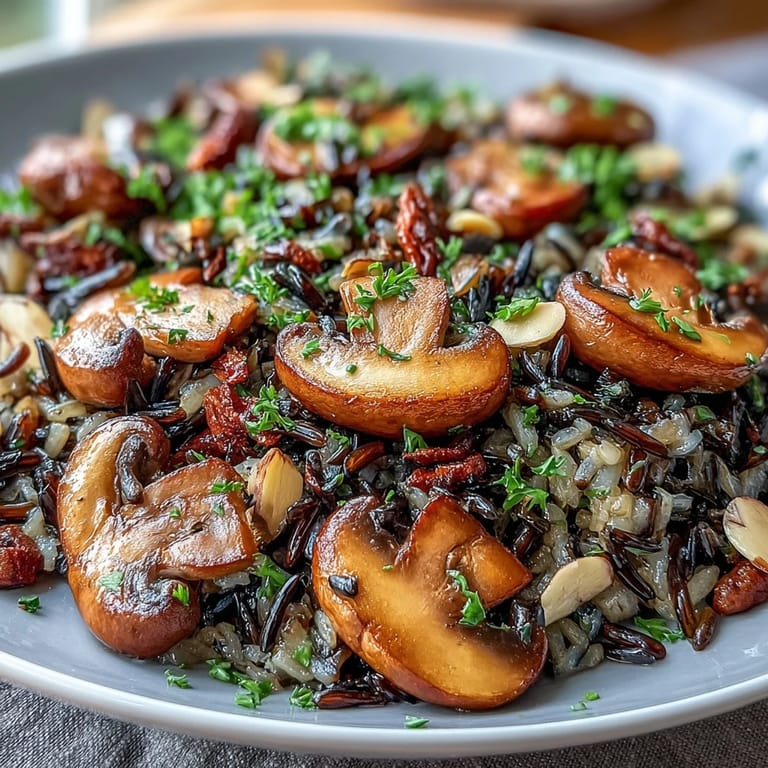
Save There's something about wild rice that makes me feel like I'm cooking something more intentional than usual. A friend brought a casserole dish of it to a potluck years ago, and I couldn't stop eating it—not because it was fancy, but because it tasted like someone actually cared about getting the flavors right. That moment stuck with me, and I've been chasing that same earthy, satisfying feeling ever since. This version, loaded with mushrooms that turn golden and nutty in the pan, became the one I keep coming back to.
I made this for my mom's birthday dinner when she decided she was done with heavy meat-and-potato meals. Watching her face light up when she tasted it told me everything—sometimes the best dishes are the ones that surprise people by being exactly what they didn't know they needed. She asked for seconds, which never happens.
Ingredients
- Wild rice: The star that gives this pilaf its nutty character and slight chew—rinsing it first removes any debris and prevents bitterness.
- Vegetable broth and water: The 2:1 ratio of broth to water keeps the rice flavorful without overwhelming it, and using low-sodium lets you control the salt.
- Olive oil: It carries the flavor of the vegetables and mushrooms, so don't skimp on quality here.
- Yellow onion, garlic, celery, and carrot: These are your aromatic base, and chopping them small means they distribute evenly and soften into the rice.
- Cremini or button mushrooms: Cremini have a deeper, earthier flavor, but button mushrooms work beautifully too—slice them evenly so they cook at the same rate.
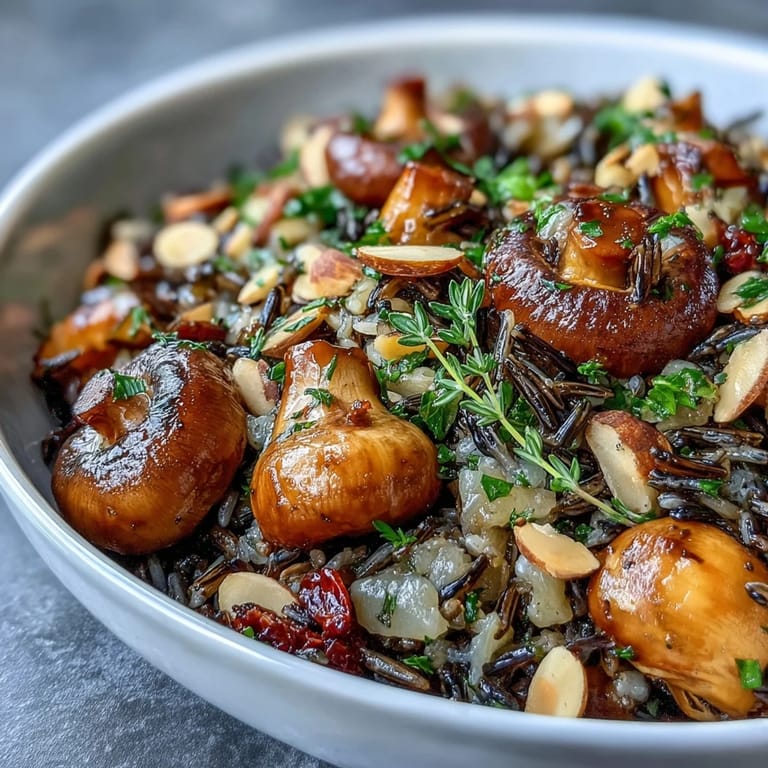
- Fresh thyme and bay leaf: Thyme pairs with mushrooms like an old friendship, and the bay leaf adds a subtle backbone of flavor that you notice when it's gone.
- Salt, pepper, fresh parsley, and optional almonds: These finishing touches brighten the dish and add texture that keeps it from feeling one-note.
Tired of Takeout? 🥡
Get 10 meals you can make faster than delivery arrives. Seriously.
One email. No spam. Unsubscribe anytime.
Instructions
- Get the rice going:
- Rinse your wild rice under cold water, then combine it with the broth and water in a medium saucepan and bring to a rolling boil. Once it boils, drop the heat to a simmer, cover it, and let it cook undisturbed for 40 to 45 minutes—the rice should be tender but still have a little bite to it, and most of the liquid will be absorbed.
- Build your aromatics:
- While the rice cooks, heat olive oil in a large skillet over medium heat and add your chopped onion, celery, and carrot. Sauté for 5 to 6 minutes, stirring occasionally, until the vegetables soften and the onion becomes translucent—this is where the foundation of flavor happens.
- Coax the mushrooms to golden:
- Add your minced garlic and sliced mushrooms to the skillet and cook for 6 to 8 minutes, stirring now and then, until the mushrooms turn golden brown and release their moisture. You'll notice the pan goes from wet to fragrant to almost dry—that's exactly right.
- Season and marry the flavors:
- Scatter in the thyme and bay leaf, season with salt and pepper, and cook for just one more minute to let the herbs wake up. Fish out the bay leaf before you proceed.
- Bring it all together:
- Gently fold the cooked wild rice into the mushroom mixture using a wooden spoon, turning everything together until it's evenly combined. Taste a spoonful and adjust the salt and pepper—this is your last chance to get it exactly how you like it.
- Finish and serve:
- Transfer everything to a serving dish, scatter fresh parsley across the top, and add the toasted almonds if you're using them. Serve it warm, and watch people go back for thirds.
 Save
Save My partner once asked why I bothered making this when I could just buy rice pilaf at the store, and I didn't have a good answer until he actually tasted it. The difference was in the mushrooms, in the thyme, in the care—small things that add up to something that tastes like home.
The Secret Life of Mushrooms in Cooking
Mushrooms intimidate people, but they're actually the most forgiving ingredient if you know one thing: they're about 90 percent water, and you need to let that water evaporate before they can brown. This takes patience and a medium heat, not high heat with a lid on. Once that moisture is gone, the proteins in the mushrooms caramelize and develop that deep, savory flavor that makes people ask what you put in here.
Wild Rice vs. Brown Rice: When and Why
Wild rice has a chewier texture and nuttier flavor than brown rice, but it also costs more and takes slightly longer to cook. Brown rice will absolutely work here and gives you a softer, more familiar grain—think of wild rice as the showier choice and brown rice as the comfortable one. Some people do a half-and-half blend, which gives you the best of both textures.
Making It Your Own
This pilaf is a canvas, and I've learned that the best dishes are the ones you're willing to adjust. A splash of dry white wine when you add the mushrooms deepens the savory notes, and if you have fresh sage instead of thyme, that's beautiful too. Don't be afraid to taste as you go and let your palate guide you—this is your kitchen, not mine.
- If you want it more luxurious, stir in a tablespoon of butter at the end just before serving.
- For a protein boost, fold in some cooked lentils or white beans alongside the rice.
- Keep the leftovers in the fridge for up to three days, and it reheats beautifully with a splash of broth and a lid over medium-low heat.
 Save
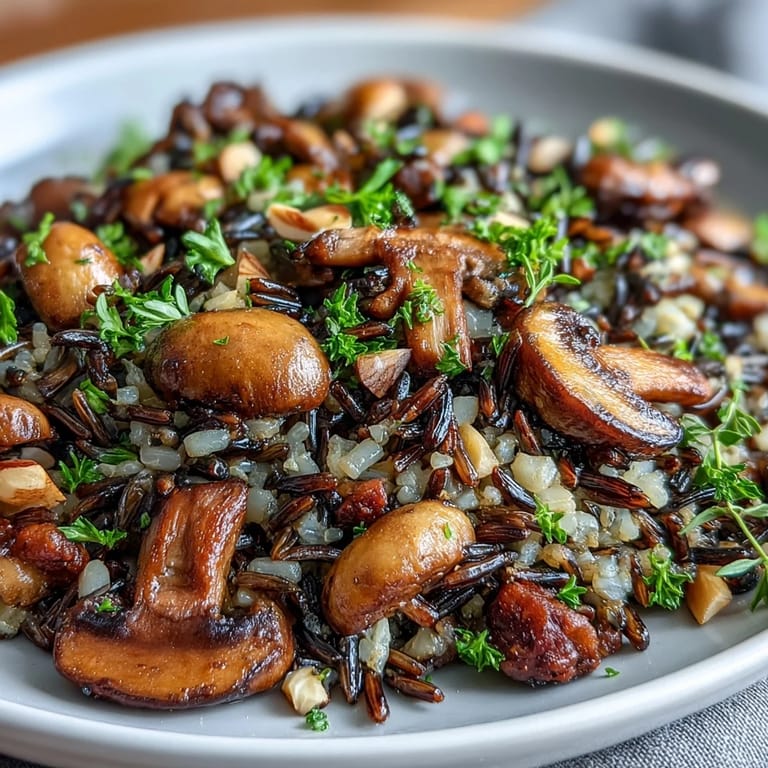
Save This pilaf has become my answer when I'm not sure what to make for dinner but want something that feels nourishing and complete. It's proof that simple ingredients, when treated with respect and a little attention, become something you'll want to make again and again.
Recipe FAQ
- → What makes wild rice different from regular rice?
Wild rice is actually a semi-aquatic grass rather than true rice. It has a chewy texture, distinct nutty flavor, and longer grains that cook to a tender yet firm consistency. The dark color comes from its natural pigments.
- → Can I use other types of mushrooms?
Absolutely. While cremini or button mushrooms work beautifully, you can substitute shiitake for extra umami, portobello for meatiness, or a mix of wild mushrooms for more complex flavors and varied textures.
- → How do I know when the wild rice is done cooking?
Wild rice is properly cooked when the grains have split open slightly, revealing the white interior, and are tender but still retain a slight chew. Some grains may burst completely while others remain more intact—this variation is normal.
- → Can I make this dish ahead of time?
Yes, this pilaf reheats wonderfully. Prepare the components separately, combine when ready to serve, and warm gently. The flavors often develop and improve after sitting, making it an excellent make-ahead option for meals.
- → Is this dish suitable for meal prep?
Perfectly suited. The pilaf keeps well in the refrigerator for 4-5 days and can be frozen for longer storage. Reheat with a splash of water or broth to refresh the texture. The mushrooms may lose some crispness but the flavors remain delicious.
- → What can I serve with wild rice pilaf?
This versatile pilaf pairs beautifully with roasted chicken, turkey, or pork tenderloin. It also complements grilled fish, roasted vegetables, or can stand alone as a satisfying vegetarian main with a simple side salad.