 Save
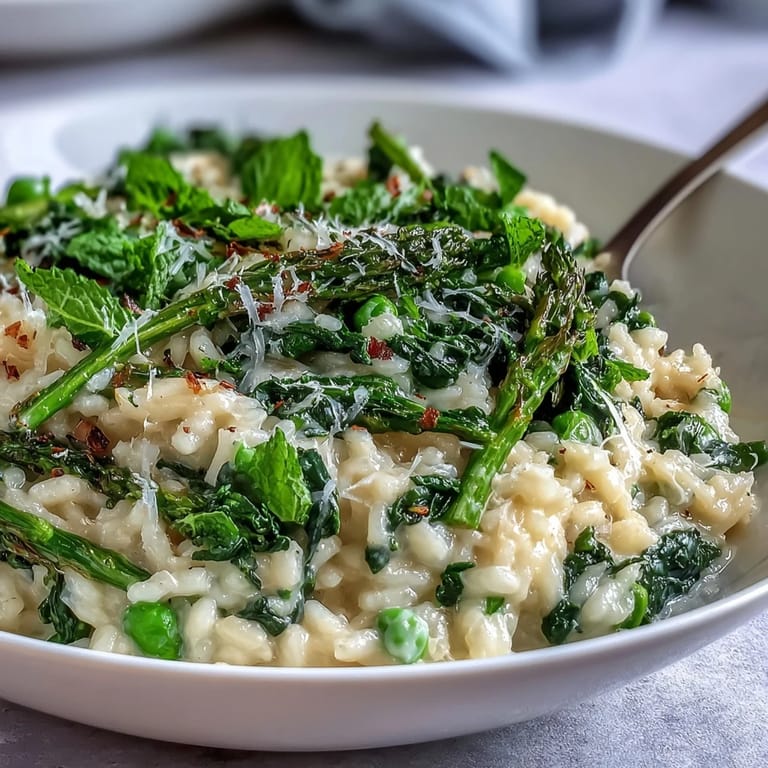
Save There's something about the first warm evening of spring that makes you want to cook something bright and alive. I was arranging flowers in a vase when my neighbor mentioned she'd just picked fresh peas from her garden, and suddenly I knew exactly what I wanted to make for dinner that night. This risotto came together almost by accident that evening, a spontaneous celebration of the season that ended up being one of those dishes people still ask me to make.
My sister visited from out of town on an unusually warm April afternoon, and I wanted to show her what I'd been excited about in the kitchen lately. We sat on the patio with our bowls, and she kept saying it tasted like spring smelled, which honestly felt like the highest compliment. That's when I realized this dish had become my go-to move for making people feel welcome.
Ingredients
- Fresh or frozen green peas (1 cup, 150 g): Fresh peas are a gift in spring, but frozen ones work beautifully and actually hold their color better once cooked.
- Small onion (1, finely chopped): The foundation of everything good, soft and sweet after a few minutes in butter.
- Garlic cloves (2, minced): Just enough to whisper in the background without overpowering the delicate mint and peas.
- Arborio rice (1 1/2 cups, 300 g): This short grain rice is worth seeking out because it releases starch slowly, creating that creamy dream texture risotto is famous for.
- Vegetable stock (4 cups, 1 L, kept warm): Keep it simmering in a separate pot so it's ready to work with the rice without shocking it with cold liquid.
- Dry white wine (1/2 cup, 120 ml): The acidity brightens everything and adds sophistication without tasting boozy.
- Unsalted butter (3 tbsp, divided): Most goes in at the start to toast the rice, and the final tablespoon at the end creates that silky finish.
- Freshly grated Parmesan cheese (1/2 cup, 40 g, plus extra): Grate it yourself right before cooking, always, because pre-shredded has anti-caking agents that interfere with creaminess.
- Fresh mint leaves (1/4 cup, 10 g, finely chopped): This is the green flag that announces spring; add it at the very end so it stays vibrant and aromatic.
- Fresh flat-leaf parsley (2 tbsp, chopped, optional): An earthy note that balances the mint beautifully, though entirely your call.
- Salt and freshly ground black pepper: Taste as you go and adjust at the end when all the elements are together.
- Lemon zest (from 1 lemon): Just a whisper of brightness that ties everything together and makes people wonder what makes it taste so alive.
Tired of Takeout? 🥡
Get 10 meals you can make faster than delivery arrives. Seriously.
One email. No spam. Unsubscribe anytime.
Instructions
- Set your stock to a gentle simmer:
- Pour the vegetable stock into a separate saucepan and keep it warm and ready on another burner, because you'll be adding it gradually and cold stock will interrupt the cooking rhythm.
- Build your foundation with onion and garlic:
- Melt 2 tablespoons of butter in your large saucepan over medium heat, then add the chopped onion and let it soften for about 4 minutes until it becomes translucent and sweet. Stir in the garlic and cook for just 1 minute more, until fragrant.
- Toast the rice until it gleams:
- Add the Arborio rice and stir constantly for about 2 minutes, coating each grain in the butter until it looks slightly golden and smells nutty. This step creates a protective barrier that helps the rice stay al dente instead of turning mushy.
- Welcome the white wine:
- Pour in the white wine and keep stirring until it's mostly absorbed into the rice, about 2 minutes. You'll see the grains plump slightly and the liquid disappear into them.
- Begin the patient dance with stock:
- Add the warm stock one ladle at a time, stirring constantly, and wait until most of the liquid is absorbed before adding the next ladle. This gradual process continues for about 18 to 20 minutes, and it's what transforms the rice into something creamy and luxurious.
- Bring the peas into the final moments:
- During the last 5 minutes of cooking, stir in the peas so they stay bright green and tender rather than fading into the background. They'll warm through and add their delicate sweetness without overwhelming the dish.
- Finish with grace and mint:
- Remove the pan from heat and stir in the remaining tablespoon of butter, the freshly grated Parmesan, chopped mint, parsley if using, lemon zest, salt, and pepper. Mix everything gently until the risotto is creamy and cohesive, then taste and adjust seasoning.
- Serve immediately while it's at its peak:
- Divide the risotto into bowls, sprinkle with extra Parmesan and fresh mint leaves, and bring to the table right away while the texture is perfect and the aroma is still bright.
 Save
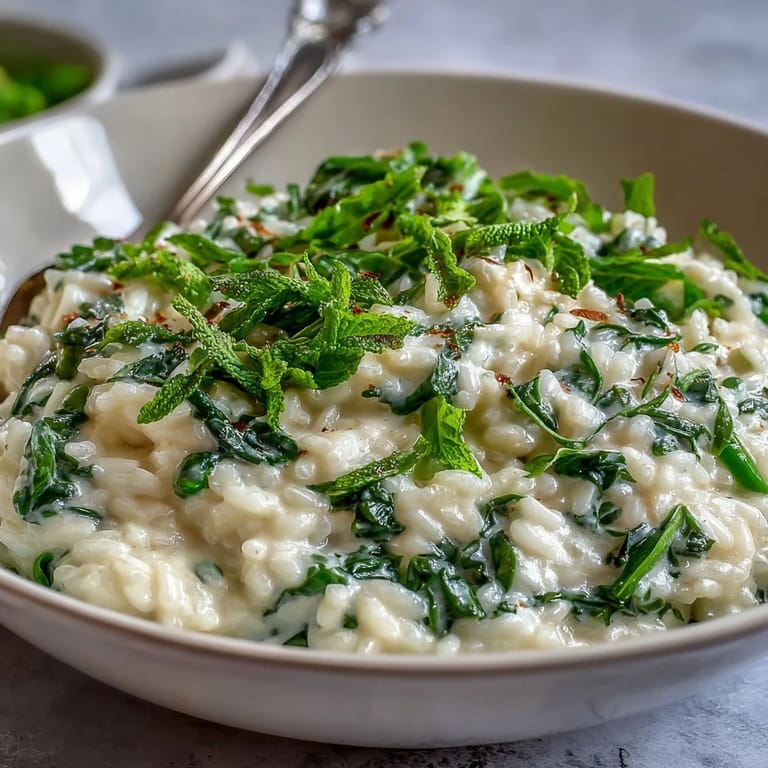
Save I made this for a small dinner party last May when the garden was finally bursting, and watching three different people close their eyes and just enjoy a spoonful reminded me why I love cooking. Food tastes better when it captures a moment in time, and this risotto tastes like spring itself.
The Secret to Creamy Risotto
The creaminess everyone loves about risotto isn't actually from cream at all; it comes from the starch in the rice releasing into the cooking liquid as you stir. The butter and Parmesan amplify this effect, but the real magic is the relationship between constant movement, warm stock, and time. I learned this the hard way when I tried to rush a batch while cooking for company, and it turned into a watery disaster that taught me patience actually tastes better.
Why Fresh Mint Makes All the Difference
Dried mint would turn this into something completely different and flatter, while fresh mint adds brightness and an almost cool sensation that announces springtime. The essential oils in fresh mint are delicate and volatile, so it needs to hit the warm risotto at the very last moment before serving, when it can still perfume your entire bite. I once made the mistake of adding mint too early and watched it turn dark and muted, which taught me respect for the timing.
Pairing and Serving Ideas
This risotto feels at home on a spring table with something crisp and light beside it, and it's dressed up enough for guests but easy enough for a weeknight when you want to feel a little fancy. A green salad with lemon vinaigrette cuts through the richness beautifully, and if you're feeling generous, a drizzle of really good olive oil over the top adds another layer of flavor that makes people lean in closer with their spoons.
- A crisp Sauvignon Blanc or Pinot Grigio beside your bowl makes both the wine and the risotto taste better together.
- If you have leftover risotto, it transforms beautifully into risotto cakes the next day, crispy on the outside and creamy within.
- A handful of toasted breadcrumbs on top adds a little textural surprise that no one expects but everyone loves.
 Save
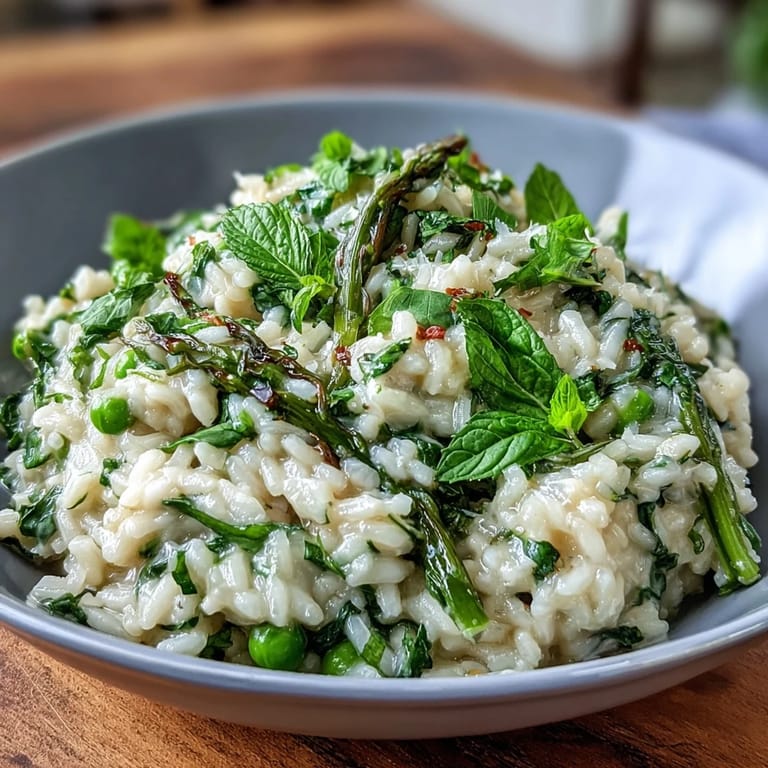
Save This risotto has become my seasonal ritual, the dish I turn to when I want to celebrate the fact that something green and alive is finally growing again. Make it once and it'll feel like a gift you give yourself every spring.
Recipe FAQ
- → How do I achieve creamy risotto texture?
Slowly add warm vegetable stock in small increments while continuously stirring until the rice releases its starch, creating a smooth, creamy consistency.
- → Can frozen peas be used instead of fresh ones?
Yes, frozen peas can be substituted and should be stirred in during the last few minutes of cooking to maintain their color and tenderness.
- → What is the purpose of white wine in this dish?
White wine adds depth and subtle acidity, enhancing the overall flavor profile before the stock is absorbed.
- → How is the fresh mint incorporated?
Finely chopped fresh mint is stirred in at the end, providing a bright, aromatic note that complements the peas.
- → What can I serve alongside this risotto?
Pair with a crisp white wine such as Sauvignon Blanc or Pinot Grigio and a simple green salad to balance the richness.