 Save
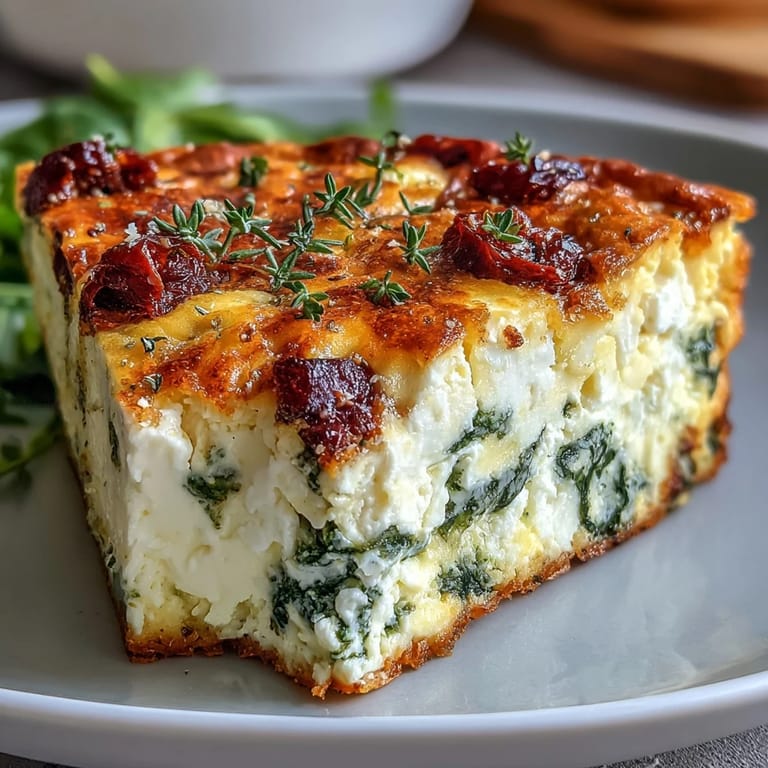
Save There's something magical about Sunday mornings when you're hosting brunch and you want to impress without spending hours in the kitchen. My neighbor handed me a warm slice of her spinach and feta frittata one lazy afternoon, and I was instantly hooked—the way the creamy eggs yielded to my fork, how the sun-dried tomatoes added these little bursts of sweet intensity, and that salty feta crumble that tied everything together. I went home and started experimenting that same week, and now it's become my go-to dish when I need something that looks fancy but doesn't require a culinary degree.
I made this for my book club gathering last spring, and watching everyone go back for seconds while debating the wine pairing was pure joy. One friend who'd been skeptical about eggs suddenly understood why I raved about frittatas—there's something about the custardy texture combined with those pockets of tangy cheese and bright tomato that just works. That afternoon taught me that simple food made with intention often becomes the meal people remember.
Ingredients
- Fresh baby spinach (2 cups): Use the tender, delicate leaves if you can find them—they wilt down beautifully and don't leave that bitter, stringy texture you sometimes get with tougher varieties. If you're short on time, frozen spinach works perfectly as long as you squeeze out every drop of moisture.
- Sun-dried tomatoes (1/2 cup, packed in oil): The oil they're packed in is liquid gold for your skillet, so don't drain it into the sink—use it as part of your cooking fat. These little jewels add a concentrated sweetness and chewiness that fresh tomatoes could never deliver.
- Yellow onion (1 small, finely chopped): The sweetness from slow-cooking onions balances the salt and tang of the cheese beautifully, and it distributes throughout the frittata like a gentle flavor backbone.
- Garlic (1 clove, minced): Just one clove keeps things subtle—this isn't a garlic-forward dish, but that whisper of aroma makes all the difference in depth.
- Large eggs (6): Room temperature eggs blend more smoothly and create a silkier custard than cold ones straight from the fridge.
- Whole milk (1/4 cup): The dairy adds richness and helps the eggs puff up slightly in the oven, though you could substitute with cream for an extra-luxe version.
- Feta cheese (1/2 cup, crumbled): Don't buy pre-crumbled if you can help it—a block of good feta tastes sharper and creamier, and you'll notice the quality difference immediately.
- Parmesan cheese (1/4 cup, grated): This adds a subtle nutty undertone and helps the top achieve that slight golden crust that makes the dish feel restaurant-quality.
- Dried oregano (1/2 tsp): Mediterranean herbs are essential here—oregano echoes the flavors already present and ties the whole dish together.
- Olive oil (2 tbsp): Use something flavorful but not your most expensive bottle; medium heat is going to treat it gently anyway.
- Salt and pepper: Taste as you go, especially after adding the salty cheeses, because you might need less than you'd expect.
Tired of Takeout? 🥡
Get 10 meals you can make faster than delivery arrives. Seriously.
One email. No spam. Unsubscribe anytime.
Instructions
- Heat your oven and start your base:
- Preheat to 375°F while you work on the stovetop—this way your skillet goes straight from burner to oven without any wait time. Pour olive oil into your ovenproof skillet and let it shimmer over medium heat, which takes about a minute.
- Soften the aromatics:
- Add your chopped onion and let it cook undisturbed for about 3 minutes until the edges turn translucent and the whole skillet smells sweet. Listen for a gentle sizzle, not an aggressive hiss—that's your cue the heat is just right. Stir in the garlic and count to 60; you want it fragrant but not browned.
- Wilt the spinach and add brightness:
- Dump in all your chopped spinach at once—it looks like way too much, but watch how it collapses into a tender pile in seconds. Stir for about 2 minutes, then add those sun-dried tomatoes and their oil, letting everything get acquainted.
- Prepare your egg mixture:
- In a separate bowl, crack your eggs and whisk them vigorously with the milk, oregano, salt, and pepper until the mixture is pale and slightly frothy. This whisking incorporates air, which gives your frittata that light, almost cloud-like quality. Once combined, fold in your crumbled feta and grated Parmesan—the warm vegetables will melt them slightly when you pour everything together.
- Combine and begin setting:
- Pour your egg mixture evenly over the vegetables, then gently stir once or twice with a spatula to distribute everything without overdoing it. Let it cook on the stovetop for 2 to 3 minutes, watching until the edges start to look slightly firm and opaque—this head start prevents the bottom from becoming rubbery.
- Finish in the oven:
- Transfer your skillet carefully to the preheated oven (use an oven mitt; the handle gets hot fast). Bake for 10 to 12 minutes until the center jiggles just slightly when you gently shake the pan—it will continue cooking slightly after you remove it, so don't overbake.
- Rest and serve:
- Let it sit in the pan for a few minutes before slicing, which makes the frittata hold together better. You can serve it warm straight from the skillet or let it cool to room temperature, which brings out different flavor notes.
 Save
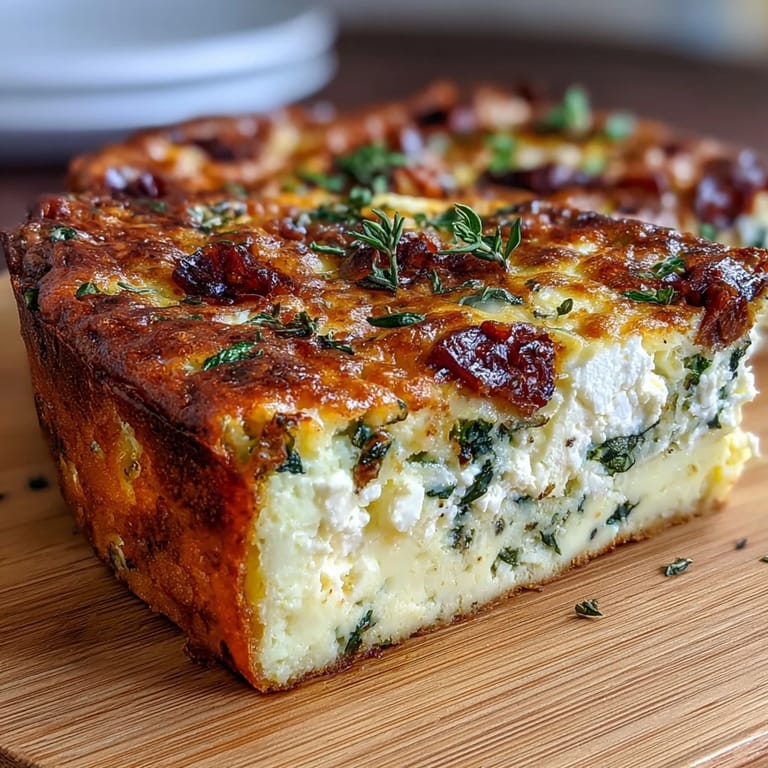
Save There was a morning when a friend who claimed to hate eggs took one bite of this frittata and looked genuinely shocked, then ate an entire quarter. We laughed about how the eggs almost disappear into the background, playing supporting role to the vegetables and cheese instead of demanding attention. That's when I realized this recipe works because it respects every ingredient equally.
Why This Works as Your New Brunch Staple
Frittatas belong in your regular rotation because they're one of those rare dishes that bridge the gap between weeknight and entertaining-mode cooking. You can throw it together with pantry staples, yet it looks elegant enough to serve to guests who are seeing your kitchen for the first time. The beauty of this particular combination is how each element—the creamy eggs, the bright spinach, the salty cheese, the concentrated sweetness of sun-dried tomatoes—plays its part without any single flavor drowning out the others.
Making It Work with What You Have
One evening I had fresh dill instead of oregano and used roasted red peppers in place of sun-dried tomatoes, and honestly, it was just as wonderful in a completely different way. The skeleton of this recipe—sautéed vegetables, whisked eggs with cheese, a hot skillet finish—is flexible enough to handle substitutions without falling apart. What matters most is maintaining the ratio of eggs to dairy to vegetables, and respecting that stovetop-to-oven transfer that creates the signature texture.
Serving Suggestions and Timing
I've found that this frittata is happiest served with something bright and fresh alongside—a simple green salad with lemon vinaigrette, some crusty bread for soaking up any juices, or even fresh fruit to cut through the richness. If you're pairing with wine, a crisp Sauvignon Blanc or light Pinot Grigio echoes the Mediterranean flavors without overwhelming the delicate egg. Timing-wise, you can eat this warm from the oven, at room temperature an hour later, or even cold from the refrigerator the next morning.
- Make it ahead by preparing the vegetable mixture the night before and storing it in a container; combine with eggs right before cooking.
- Leftovers keep for 3 to 4 days wrapped in the refrigerator and reheat beautifully in a 300°F oven for about 10 minutes.
- Double the recipe in a 12-inch skillet if you're feeding a crowd, though you might need to add 2 to 3 minutes to your baking time.
 Save
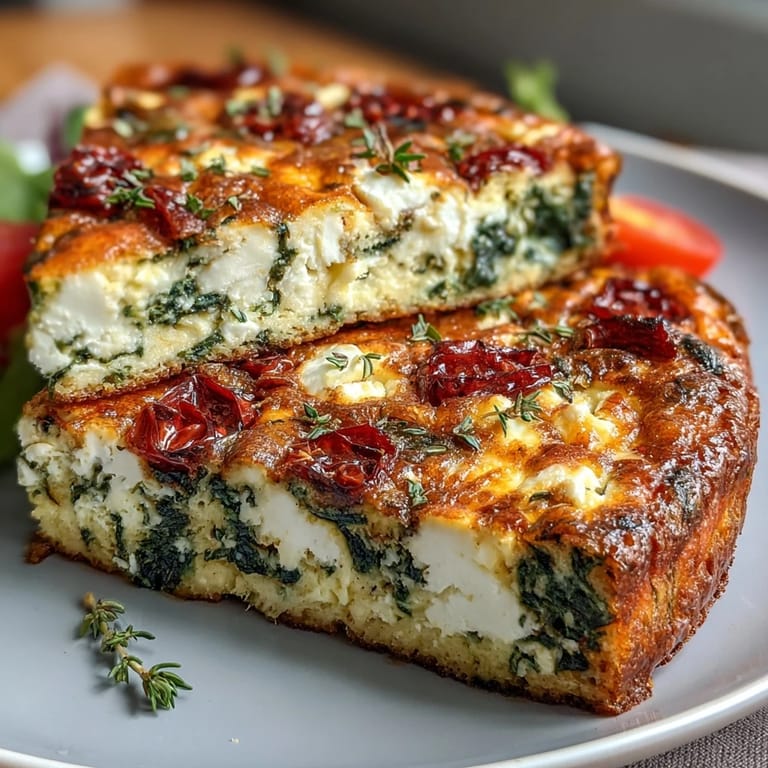
Save This frittata has become the dish I make when I want to feel like I'm cooking something special without the stress, and when I want to feed people something that tastes like care. It's proof that the best recipes don't need to be complicated—they just need to be thoughtfully put together and cooked with attention.
Recipe FAQ
- → Can I use frozen spinach instead of fresh?
Yes, thawed and well-drained frozen spinach works well as a substitute, maintaining texture and flavor.
- → What is the best way to cook the vegetables before baking?
Sauté onions and garlic in olive oil until soft, then add spinach until wilted and finish with sun-dried tomatoes for even flavor distribution.
- → How do I know when the frittata is fully cooked?
The edges should set on the stove, and after baking, the center will be just set with a slightly golden top.
- → Can I substitute dairy cheeses for a vegan option?
Plant-based feta and omitting Parmesan provide a dairy-free alternative while keeping the dish flavorful.
- → What dishes pair well with this frittata?
It pairs nicely with a green salad, crusty bread, or a crisp white wine like Sauvignon Blanc for a complete meal.