 Save
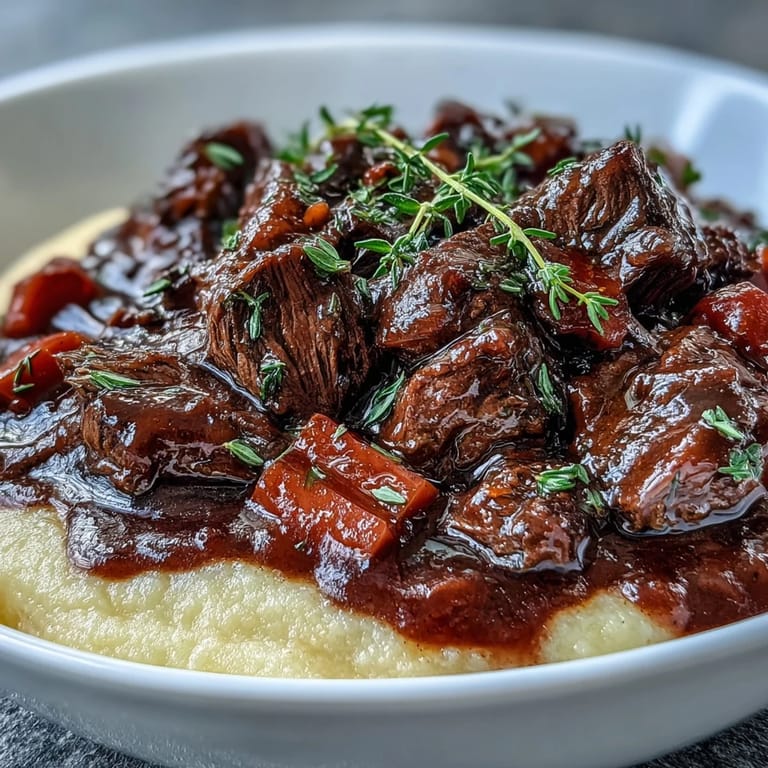
Save The first time I opened a bottle of sloe gin in my kitchen, I wasn't sure what to expect beyond the deep ruby color and faint scent of wild hedgerows. A neighbor had given me a jar of homemade sloe gin after a particularly good autumn foraging trip, and I'd been holding onto it, waiting for the right moment. When I found venison shoulder at the butcher on a blustery February afternoon, something clicked. I remembered reading about game stews enriched with fruit liqueurs, and suddenly that bottle made perfect sense tucked into a slow-simmering pot with juniper and thyme.
I made this for a small dinner party once, and the kitchen smelled so good that my guests kept wandering in before the food was ready. One friend asked if I'd been cooking all day, but really it was just the juniper and thyme doing their work, filling the house with that unmistakable scent of winter comfort. We ate it by candlelight with thick slices of bread on the side, and everyone went quiet for the first few bites. That's when I knew I'd made something worth repeating.
Ingredients
- Venison shoulder or stewing venison: This cut is perfect for slow cooking because it has enough connective tissue to break down into tenderness, and it stays moist and flavorful even after hours in the pot.
- Olive oil: I use a good quality olive oil for browning the meat because it can handle the heat and adds a subtle richness to the base of the stew.
- Onion, carrots, and celery: The classic mirepoix forms the aromatic backbone of the stew, and I've learned to cook them until they're truly soft and sweet before adding anything else.
- Garlic cloves: Fresh garlic minced at the last moment brings a pungent warmth that mellows beautifully as the stew simmers.
- Tomato paste: A spoonful of tomato paste adds umami and a slight tang that balances the sweetness of the sloe gin and redcurrant jelly.
- Sloe gin: This is the heart of the recipe, a hedgerow liqueur with berry tartness and botanical complexity that you can't quite replicate with anything else.
- Beef or game stock: I prefer game stock when I can get it, but a good beef stock works beautifully and adds the savory depth needed to support the venison.
- Redcurrant jelly: Just a tablespoon brings a gentle sweetness and helps create that glossy, clinging sauce that coats the meat.
- Bay leaves and thyme: These herbs are non-negotiable for me, they add earthy, woodsy notes that remind me of walking through a cold forest.
- Juniper berries: Lightly crushed juniper berries echo the botanicals in the sloe gin and give the stew a subtle piney brightness.
- Polenta: Creamy polenta is the perfect base because it's soft, comforting, and soaks up the stew like a dream.
- Whole milk and water: Cooking polenta in milk instead of all water makes it richer and creamier, almost luxurious.
- Butter and Parmesan: Stirred in at the end, they turn simple polenta into something silky and indulgent that stands up to the bold stew.
Tired of Takeout? 🥡
Get 10 meals you can make faster than delivery arrives. Seriously.
One email. No spam. Unsubscribe anytime.
Instructions
- Brown the venison:
- Heat the olive oil in a large, heavy-based casserole over medium-high heat and brown the venison cubes in batches, making sure not to crowd the pan. This step builds flavor through caramelization, so don't rush it.
- Cook the vegetables:
- Add the onion, carrots, and celery to the same pan and cook for 5 to 7 minutes until they soften and start to smell sweet. Stir in the garlic and tomato paste, cooking for another minute until fragrant.
- Deglaze with sloe gin:
- Return the venison to the pan and pour in the sloe gin, letting it bubble and reduce for 2 minutes. You'll see all the browned bits lift from the bottom of the pan, which is pure flavor.
- Add stock and aromatics:
- Pour in the stock, then stir in the redcurrant jelly, bay leaves, thyme, and juniper berries. Season with salt and pepper, then bring everything to a gentle simmer.
- Simmer the stew:
- Cover the pot and cook on low heat for 2 hours, stirring occasionally, until the venison is so tender it almost falls apart. The sauce will thicken and become glossy as it reduces.
- Prepare the polenta:
- While the stew simmers, heat the milk and water in a saucepan until just simmering. Gradually whisk in the polenta and cook over low heat, stirring constantly, for 5 to 10 minutes until thick and creamy.
- Finish the polenta:
- Stir in the butter and Parmesan, then season to taste with salt. The polenta should be smooth and luxurious, not grainy.
- Serve:
- Remove the bay leaves and thyme sprigs from the stew and ladle it over generous portions of creamy polenta. Serve hot with a sprinkle of fresh parsley if you like.
 Save
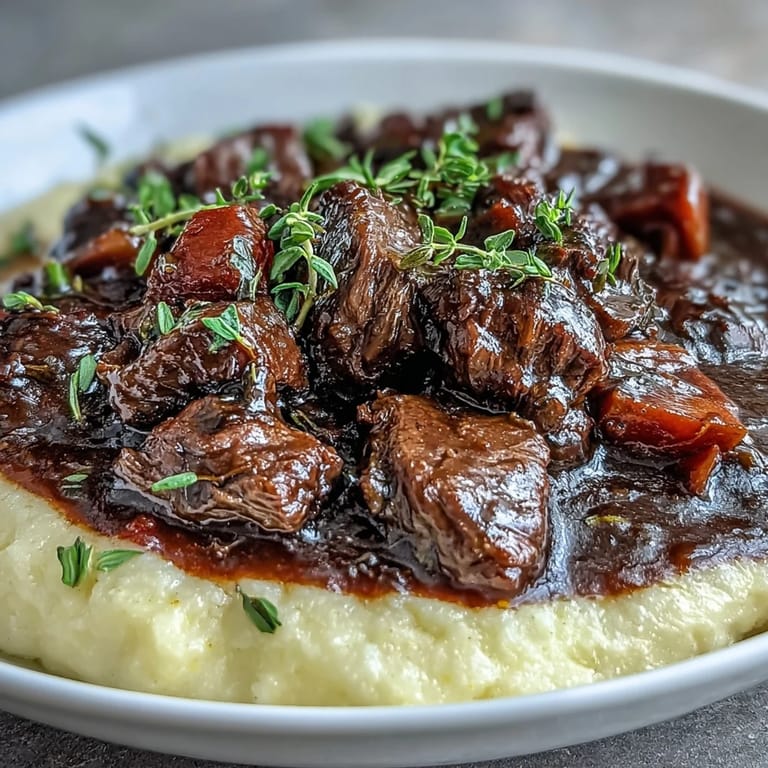
Save There's a moment when you lift the lid after two hours and the smell hits you, rich and sweet and savory all at once, that makes all the waiting worthwhile. I've served this stew on cold evenings when the windows are fogged up and the world outside feels far away, and it never fails to make the table feel like the warmest place in the house. It's the kind of dish that turns a regular weeknight into something a little bit special.
What to Do If You Can't Find Sloe Gin
Sloe gin can be tricky to find depending on where you live, but don't let that stop you from making this stew. A good-quality port works beautifully and adds a similar sweetness and depth, or you can use a berry liqueur like cassis or even a splash of red wine mixed with a spoonful of blackberry jam. I've experimented with all three, and while the flavor shifts slightly, the stew remains rich and comforting. The key is to keep that balance of fruit and alcohol, which deglazes the pan and adds complexity as it reduces.
How to Store and Reheat Leftovers
This stew actually tastes better the next day after the flavors have had time to meld and deepen overnight in the fridge. I store it in an airtight container for up to three days, and I reheat it gently on the stovetop with a splash of stock or water to loosen the sauce. The polenta doesn't keep as well, it tends to solidify and lose its creamy texture, so I usually make a fresh batch when I'm reheating the stew. If you do have leftover polenta, you can slice it, pan-fry it until crispy, and serve the stew on top for a different but equally delicious experience.
Pairing and Serving Suggestions
I've learned that a robust red wine like Shiraz or Cabernet Sauvignon stands up beautifully to the bold flavors of venison and sloe gin, and it makes the meal feel like a proper occasion. A simple green salad with a sharp vinaigrette cuts through the richness, and crusty bread on the side is never a bad idea for mopping up the sauce. If you want to add a bit of color and freshness, a sprinkle of chopped parsley or a few thyme leaves over the top does wonders.
- Serve with a crisp winter salad dressed with lemon and olive oil to balance the richness.
- A side of roasted root vegetables like parsnips or turnips complements the earthy flavors beautifully.
- Don't forget to warm your serving bowls, it keeps the polenta creamy and the stew piping hot.
 Save
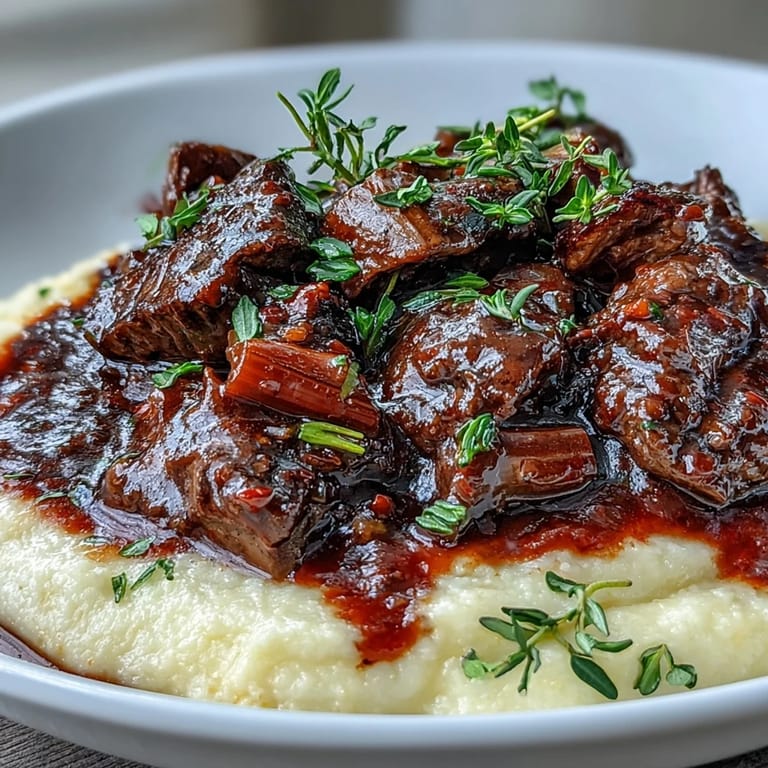
Save This is the kind of meal that makes winter feel less like something to endure and more like a season to savor, especially when shared with people you care about. I hope it brings as much warmth to your table as it has to mine.
Recipe FAQ
- → Can I substitute the venison with another meat?
Yes, beef chuck or lamb shoulder work well as substitutes. Adjust cooking time as needed until the meat is tender, typically 2-2.5 hours for beef and slightly less for lamb.
- → What can I use instead of sloe gin?
Port, berry liqueur, or a combination of red wine with a tablespoon of blackcurrant jam make excellent substitutes. Each will provide a slightly different but delicious fruity depth to the stew.
- → Can I make this stew ahead of time?
Absolutely. The stew tastes even better the next day as the flavors meld together. Store in the refrigerator for up to 3 days and reheat gently. Prepare fresh polenta when ready to serve.
- → How do I prevent the polenta from becoming lumpy?
Add the polenta gradually while whisking constantly. Keep the heat low and stir frequently throughout cooking. If lumps form, whisk vigorously or use an immersion blender briefly.
- → What wine pairs best with this dish?
Full-bodied red wines like Shiraz, Cabernet Sauvignon, or Malbec complement the rich, gamey flavors beautifully. A Côtes du Rhône or Barolo would also be excellent choices.
- → Can I cook this in a slow cooker?
Yes, after browning the meat and sautéing the vegetables, transfer everything to a slow cooker. Cook on low for 6-8 hours or high for 4-5 hours until the venison is tender.